
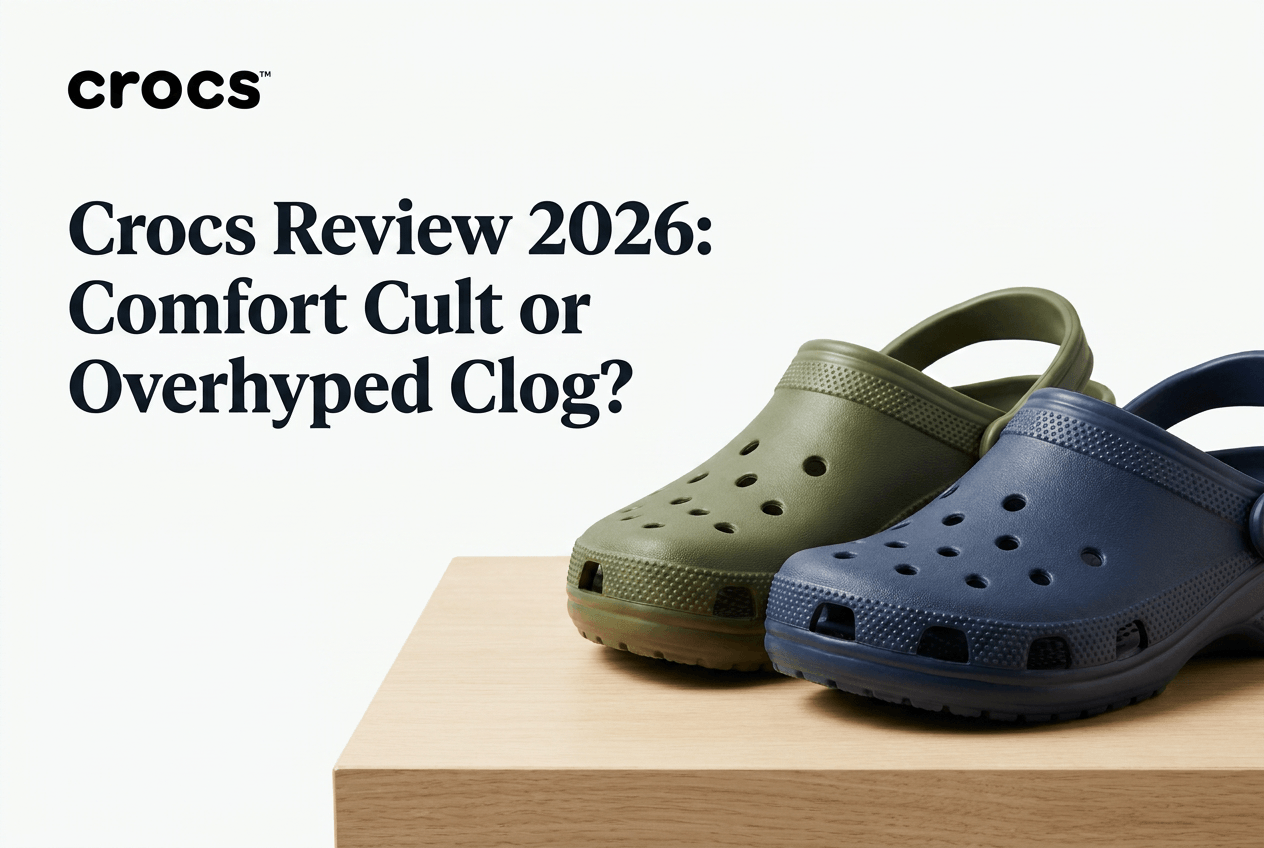
Nobody expected the shoe everyone mocked in 2008 to still be selling out in 2026, and yet here we are. Crocs went from punchline to permanent fixture in more closets than the brand probably imagined back when the Classic Clog first launched, and the comeback shows zero signs of slowing.
So is the comfort actually real, or is this just nostalgia wearing a foam shoe? We tested the claims against what long-term owners actually report, from the Croslite foam to the sizing quirks nobody warns you about upfront.
Benefits of Choosing Crocs
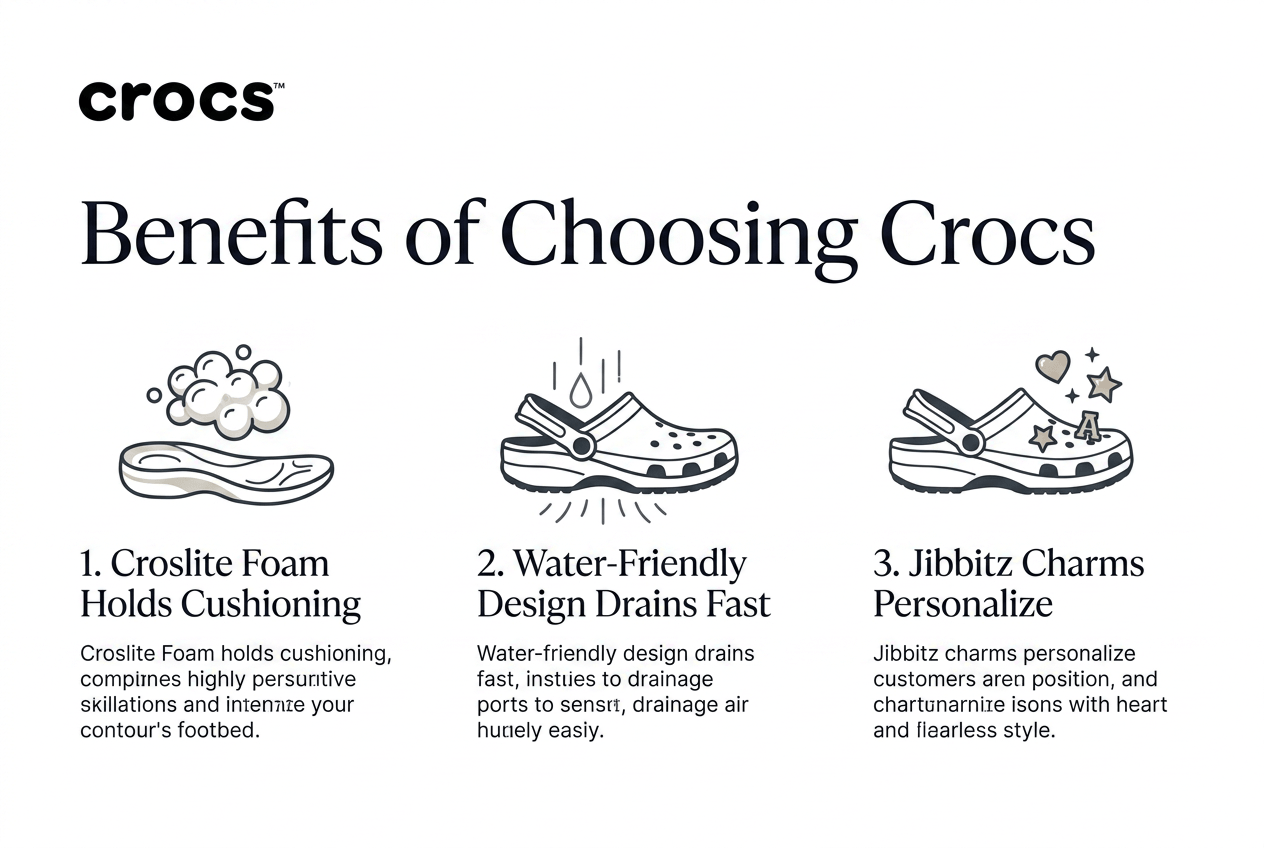
- Croslite foam holds cushioning and shape for years, not just a season
- Water-friendly design drains fast and works around pools, beaches, and rain
- Jibbitz charms let you personalize a pair without buying a new one
- Wide range of styles now, clogs, sandals, sneakers, and platform versions
- Genuinely affordable relative to other comfort-first footwear brands
What Crocs Actually Is
Crocs built its entire identity on one material, Croslite, a closed-cell foam resin that molds to your foot slightly with wear while staying lightweight and easy to hose off. That single material decision is why the brand survived years of being a style punchline, the comfort argument never really had a good counterargument.
The lineup has grown well past the original clog. Sport sandals, sneakers, platform styles, and seasonal collaborations with everyone from fast food chains to fashion houses now sit alongside the Classic Clog that started it all. That range is part of why Gen Z picked the brand back up, styling clogs in ways nobody in 2008 would have predicted.
What Crocs Offers
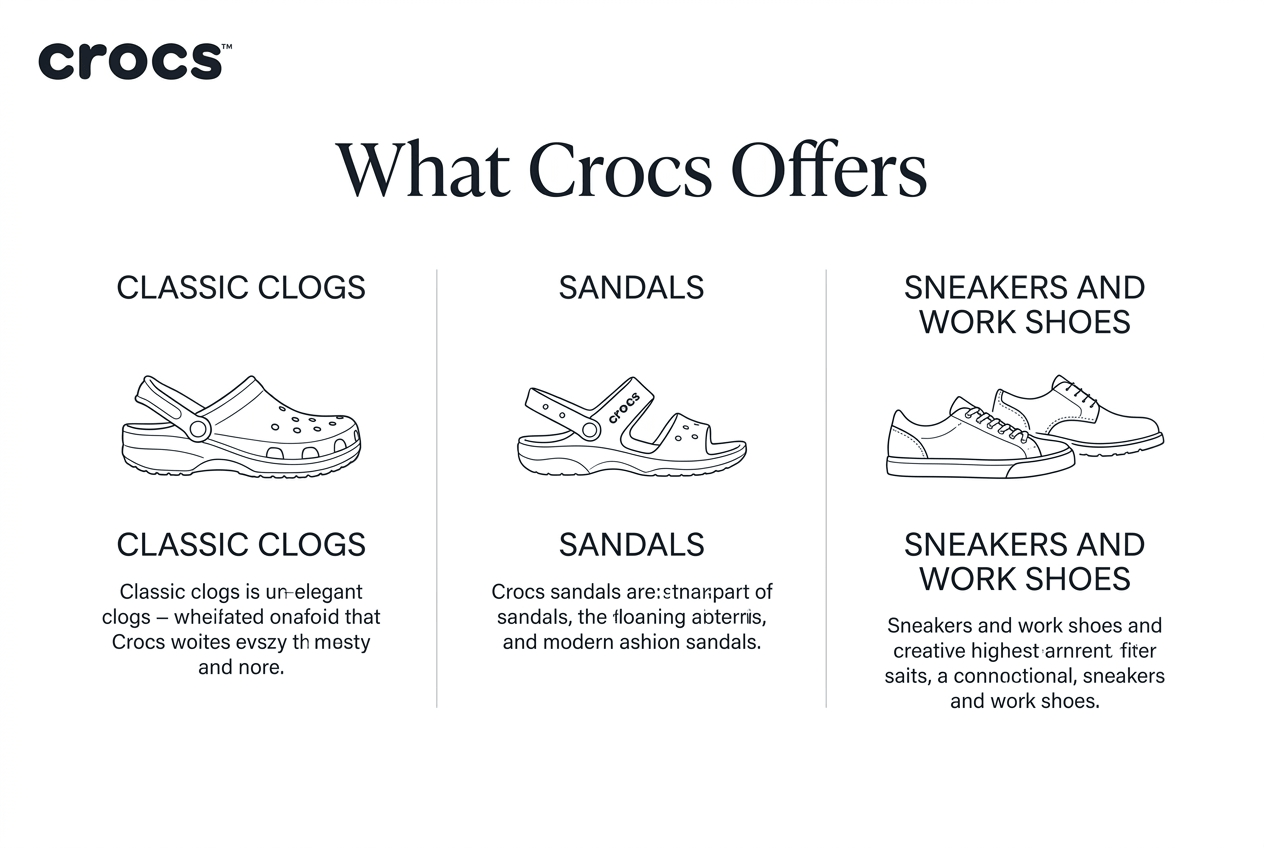
Classic Clogs
The original, and still the bestseller. Ventilated holes, a heel strap that flips up or down, and enough foam cushioning that podiatrists and nurses genuinely recommend them for long shifts on hard floors. The roomy fit that draws criticism from fashion reviewers is exactly what makes them functional for swollen feet after a twelve-hour shift.
Sandals
Miami and Brooklyn-style sandals lean more toward casual fashion than the clog's utilitarian roots, while still keeping the same lightweight, quick-dry foam base underneath. These have become genuine summer staples, showing up in beach bags and airport security lines in roughly equal measure.
Sneakers and Work Shoes
LiteRide and work-specific lines add slip-resistant soles and more structured support, aimed at people on their feet all day rather than just running errands. The work-specific styles in particular target restaurant and healthcare workers who need actual traction ratings, not just comfort.
Sizing and Comfort: What to Actually Expect
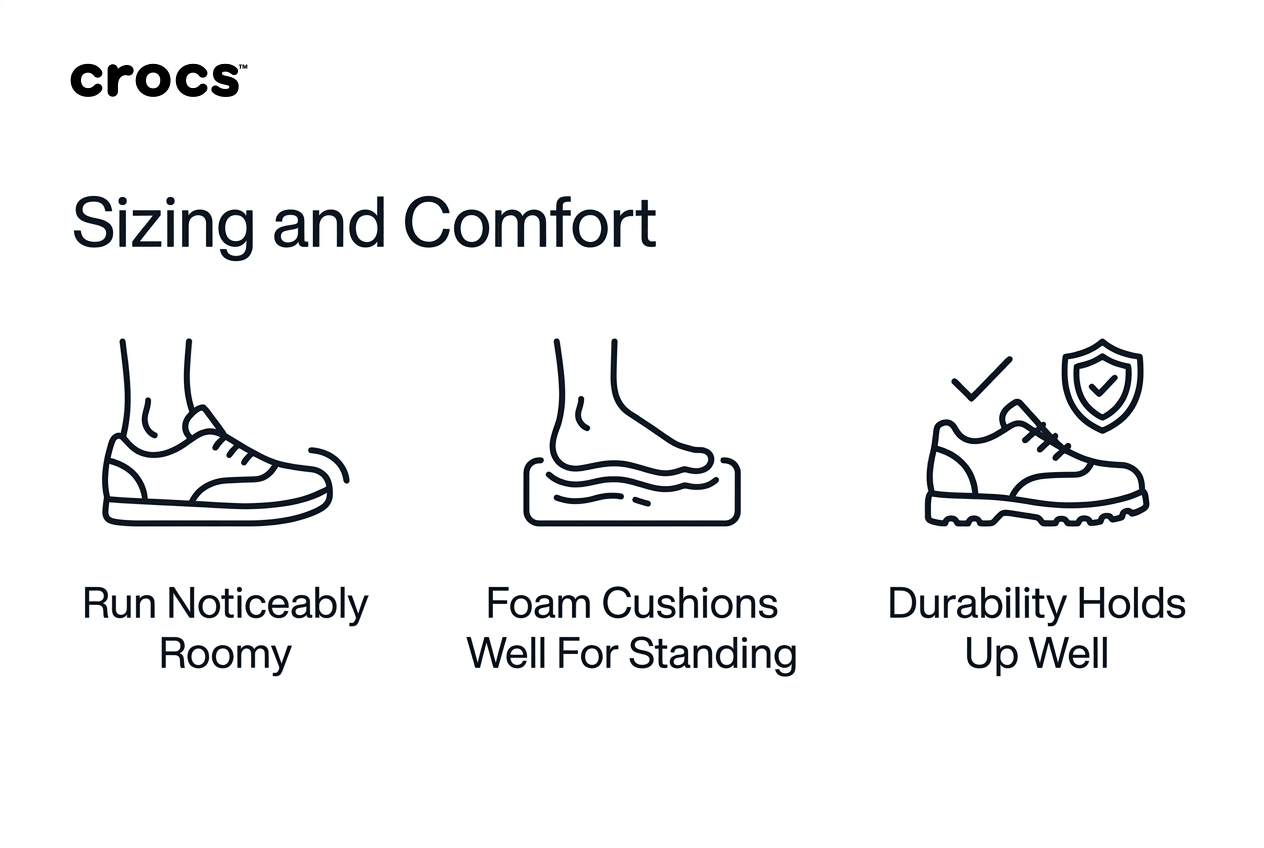
This is the part most reviews gloss over, so let's be specific. Crocs run noticeably roomy, closer to a size up from what you'd wear in a sneaker, and the toe box in particular leaves extra space that some people love and others find sloppy. Reading the size chart for your exact model before ordering saves a return trip nearly every time, since the fit does shift a bit between the Classic Clog and newer platform or sneaker styles.
Comfort feedback is remarkably consistent across thousands of reviews, the foam cushions well for standing and short walks, though it's not built as structured support for long-distance walking the way a dedicated walking shoe is. Durability holds up well too, most owners report years of wear before the foam shows real wear, with only a small percentage citing strap failures on heavier-use styles like the Mega Crush. A twist test on the midsole shows genuine structural support underneath all that squish, which explains why the shoe survives far rougher treatment than its goofy reputation suggests.
Crocs vs. Competitors
| Parameter | Crocs | Birkenstock | OOFOS |
|---|---|---|---|
| Core Material | Croslite closed-cell foam | Cork and latex footbed | Proprietary OOfoam recovery foam |
| Price Range | $45 to $70 for most clogs and sandals | $100 to $170 | $60 to $100 |
| Water Friendliness | Fully water-friendly, drains and floats | Not water-friendly, cork degrades when wet | Water-resistant, dries quickly |
| Customization | Extensive Jibbitz charm ecosystem | Minimal, mostly color and strap options | None, focused purely on recovery function |
| Best For | Everyday comfort, water activities, casual wear | Structured arch support, everyday sandals | Post-workout recovery, gentle rebound cushioning |
Birkenstock wins on structured arch support and a more polished look, but the cork base can't handle water the way Crocs can, and the price gap is significant. OOFOS targets a narrower use case, recovery after exercise, and doesn't offer anything close to the customization or style range Crocs has built out. For sheer everyday versatility at the price, Crocs holds its own against both.
Crocs Pros and Cons
| Pros | Cons |
|---|---|
| Genuinely comfortable foam that holds up over years | Sizing runs large, requiring a size-down for most people |
| Water-friendly and easy to clean | Not built for long-distance walking support |
| Huge customization ecosystem through Jibbitz charms | Ventilation holes let in dirt and small debris |
| Affordable relative to comfort-focused competitors | Style still divides opinion, even in 2026 |
| Wide range extending well past the original clog | Platform styles carry some ankle-roll risk |
Ordering Experience and What to Expect
The Crocs website is simple to navigate, with clear filters for size, width, and even Jibbitz compatibility for anyone building out a custom pair. Shipping runs reliably for domestic orders, and frequent sales, especially around back-to-school and holiday periods, bring already-affordable prices down further.
Returns follow a standard window for unworn items, and exchanges for a different size are straightforward given how often sizing trips up first-time buyers. Customer service handles the process without much friction, a fair result for a brand operating at this volume.
Frequently Asked Questions
Are Crocs actually comfortable for all-day wear?
Generally yes, especially for standing rather than walking long distances. Nurses and other on-your-feet professionals are a large part of the loyal customer base for exactly that reason.
Do Crocs run true to size?
No, most styles run roomy, so sizing down or checking the specific model's size chart before ordering is the safer move.
How durable are Crocs long term?
Very, based on widespread owner reports. The Croslite foam holds shape and color well over years, with strap failures being the main reported wear issue on heavier-use styles.
Can Crocs get wet or go in water?
Yes, the material is designed to be water-friendly, draining quickly and floating rather than absorbing water like a fabric shoe would.
Are Crocs good for people with foot pain?
Many report relief from standing-related foot pain thanks to the cushioned foam, though Crocs aren't a substitute for orthopedic footwear if you need structured medical support.
Final Verdict
Crocs earned its second act the honest way, comfort that actually holds up to real-world testing over years of wear. The sizing quirks and the divisive look are real, but neither has stopped the brand from becoming a genuine wardrobe staple rather than a joke.
If you're on the fence, order true to your foot's actual measurements rather than your usual shoe size, and expect an adjustment period if you've never worn foam-based footwear before. Once that fit is right, it's easy to see why so many people who used to mock Crocs now own three pairs.