- Coursera Plus: $59 a month or $399 a year
- Free Trial: 7 days on Plus
- Refund Window: 14 days on most purchases
- Single Courses: Roughly $49 to $79 for a set access period
- Financial Aid: Available on individual courses and specializations, not degrees
- Degrees: Priced by the university, separate admissions
Most people overpay for online learning in the same way: they subscribe to everything, finish one course, and keep paying for eleven months of good intentions.
Coursera has six or seven ways to pay, which is exactly why this happens. Sort out which one fits your actual goal and the cost drops a lot.
Start With Your Goal
| Your Goal | The Right Option |
|---|---|
| Test if a subject interests you | Free preview, or an audit where offered |
| One specific skill for work | Single course purchase |
| A career-change credential | Professional Certificate |
| Broad learning across many topics | Coursera Plus |
| A university credential | Degree or MasterTrack, priced separately |
| Tight budget, serious intent | Financial aid application |
Be honest at this step. The subscription only wins if you will genuinely take several courses. For one certificate, buying that certificate is usually cheaper.
The Plus Math
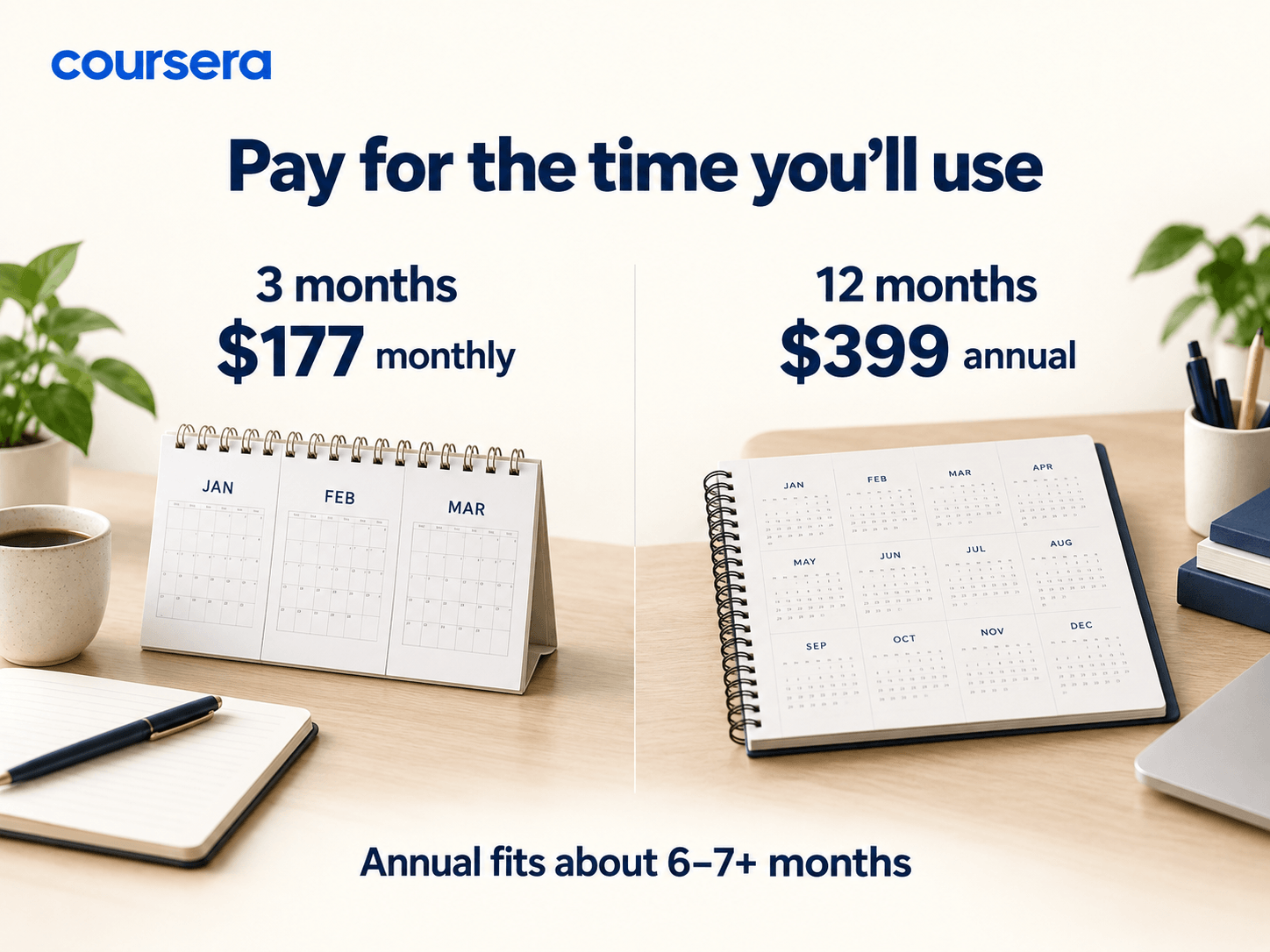
Monthly is $59. Annual is $399. Twelve months of monthly billing comes to $708, so paying yearly saves $309.
But run the other comparison first. If you plan to finish one Professional Certificate in three months, monthly billing costs about $177 and you are done. Annual only wins if you will keep learning past roughly six or seven months.
Promotions run often, with recent offers cutting the annual price or the first few monthly payments. Check for a live discount before you commit, and never pay full price in the week a sale ends.
The Free Routes That Still Work
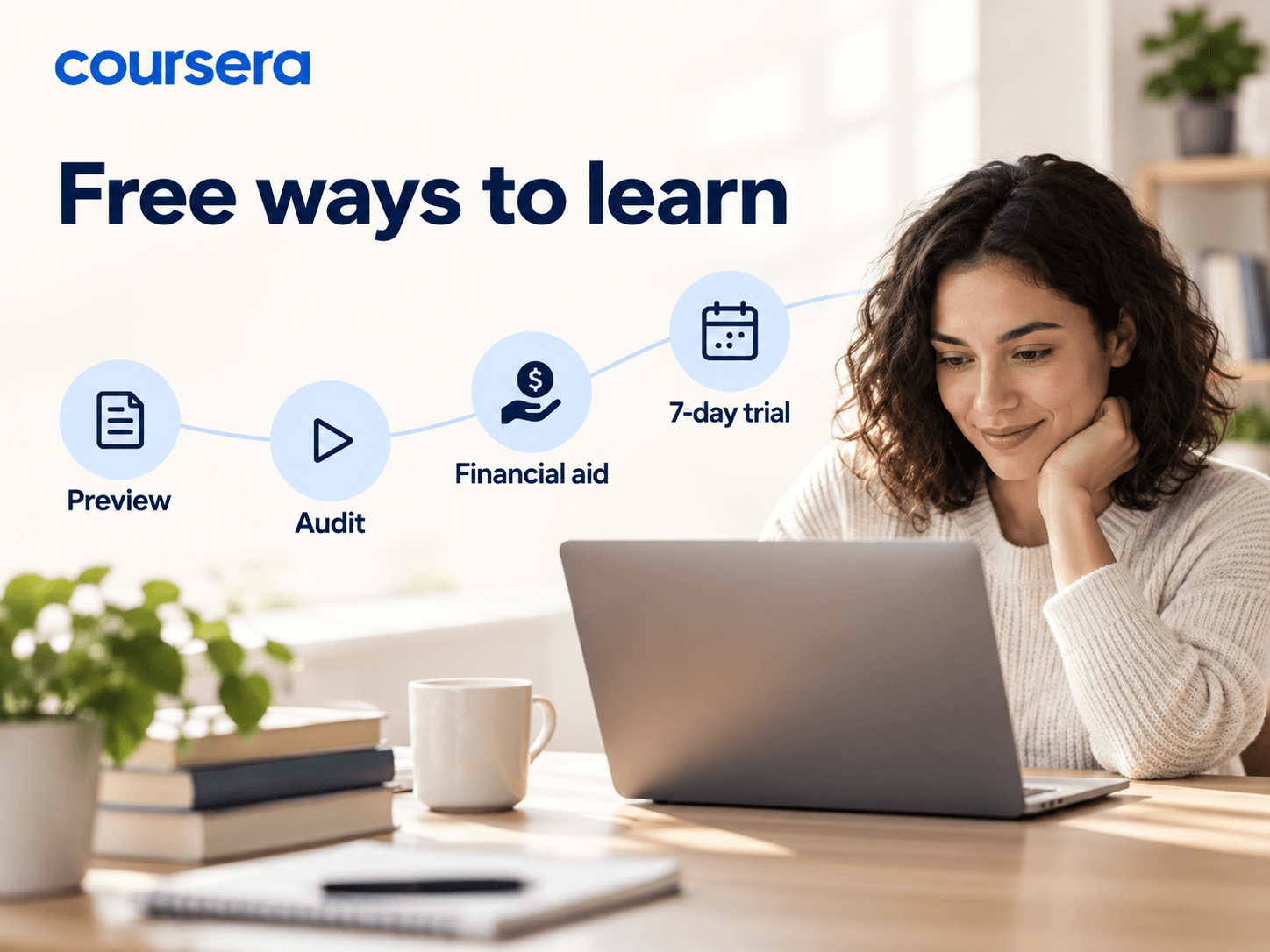
- Previews: most courses let you see the opening material before paying
- Audit: some older courses still offer full lecture access without graded work or a certificate
- Financial aid: a genuine free route that covers full access and the certificate when approved
- The 7-day trial: full access to Plus, cancellable before billing
Financial aid is underused because the application asks for effort. You apply from the course page, explain your background, employment situation, and goals, and the answers need real substance rather than a sentence each. Approval waives the fee for that course. It does not apply to Plus or to degrees.
What the Certificates Are Worth
This is the part people argue about, so here is a straight read.
Professional certificates from names like Google, IBM, Meta, and Microsoft carry the most weight, because employers recognize the issuer and some tie into hiring pipelines. They take roughly three to twelve months of part-time study.
Course and specialization certificates are real records of work you completed, but they are not qualifications. They help fill a gap on a résumé, support an internal promotion case, or show a hiring manager you took initiative. They do not replace a degree.
Degrees are a different product entirely. They come from partner universities, cost thousands, and involve a separate admissions process. They are not part of any subscription, though they often cost a fraction of the on-campus equivalent.
What Studying in Coursera B2C Actually Looks Like
Courses are built from short video lessons, readings, quizzes, and graded assignments, with deadlines you can shift if life gets in the way. Most run on a suggested weekly schedule rather than a fixed class time, so you fit them around work.
Hands-on practice varies by program. Data and IT tracks tend to include labs and guided projects where you work in a real tool rather than watch someone else use one. Business and humanities courses lean more on reading and peer-reviewed assignments, where other learners grade your work and you grade theirs. That peer system is the part learners complain about most, since feedback quality depends on who picks up your submission.
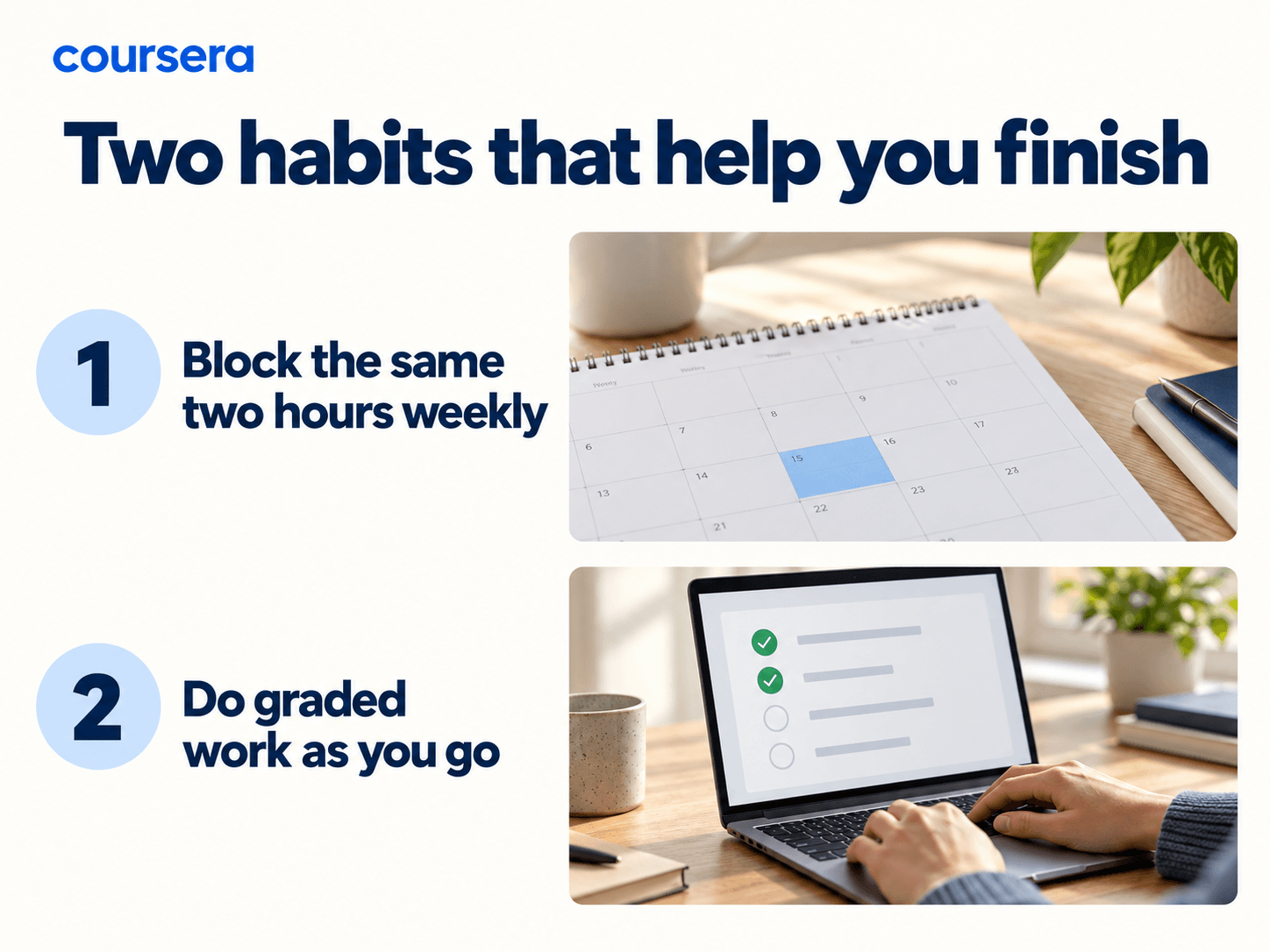
Two habits raise the odds of finishing. Block the same two hours each week rather than promising yourself a whole Saturday. And do the graded work as you go, because the backlog is what kills most enrollments around week four.
Avoid These Four Mistakes
- Subscribing before you have a plan. Pick the certificate or the course first, then decide how to pay for it.
- Missing the refund window. Most purchases carry a 14-day refund period. If a course is not what you expected, act inside two weeks.
- Forgetting auto-renewal. Learners report being surprised by renewal charges. Set a calendar reminder for the day before your term ends.
- Assuming everything is included. Coverage varies by program, so check the badge on a certificate page before you assume Plus covers it.
Who Each Plan Actually Suits in Coursera B2C
The Career Switcher
Buy the Professional Certificate directly, work through it on monthly billing, and stop paying when you finish. Add a portfolio project of your own, because the certificate alone rarely closes an interview.
The Curious Generalist
Annual Plus is the right fit. If you finish six or eight courses in a year, the per-course cost drops below anything else on the market at this quality level.
The Student on a Budget
Financial aid first, every time. Apply per course, write proper answers, and pay nothing when approved.
The Employee With a Training Budget
Ask your employer before you pay. Many companies will fund a certificate that maps to your role, and a separate team plan exists for organizations.
The Team Lead
Coursera sells a separate plan for organizations, which is worth pricing against buying individual seats if you are training more than a handful of people on the same skill.
Frequently Asked Questions
How much is Coursera Plus?
$59 a month or $399 a year, with a 7-day free trial.
Can I still learn for free?
Yes, through course previews, audit where it is offered, and financial aid, which covers full access and the certificate when approved.
What is the refund policy?
Most purchases carry a 14-day refund window.
Do employers value Coursera certificates?
Professional Certificates from major tech companies carry the most recognition. Individual course certificates are supporting evidence, not qualifications.
Are degrees included in Plus?
No. Degrees and MasterTrack certificates are priced separately by the partner university.
The Final Verdict
Coursera earns its reputation on catalogue quality. University and industry partners, structured programs, and credentials people have actually heard of put it ahead of most open course platforms.
The mistake is paying the wrong way. Decide what you want to finish, price that one thing, use financial aid if money is tight, keep the 14-day refund window in mind, and diary the renewal date the day you subscribe. Learners who do that get the credential and stop paying. Everyone else funds a library they never open.