
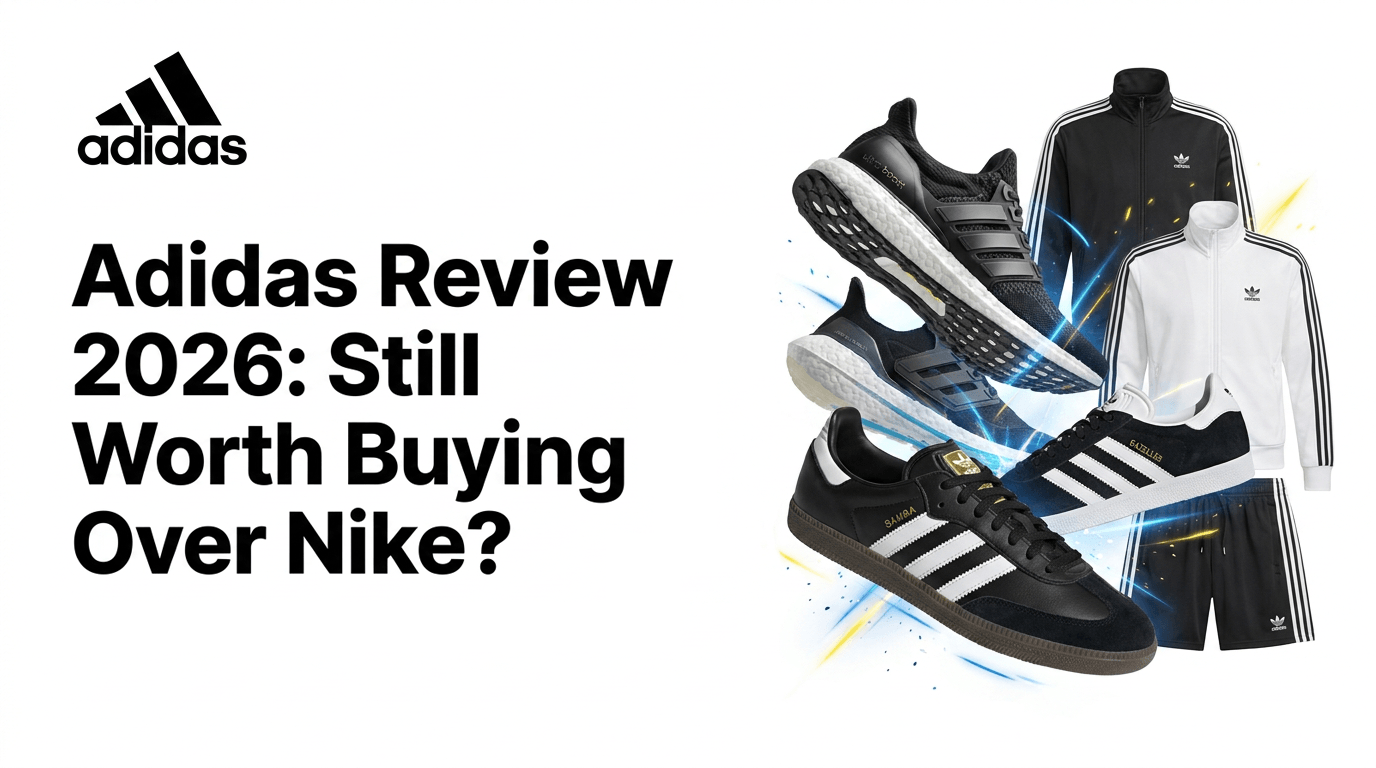
Walk into any gym, any sneaker meet, any middle school hallway, and the three stripes are still everywhere. Adidas has spent close to eighty years building that kind of default recognition, and in 2026 the brand is leaning hard into both its running heritage and a retro sneaker boom that nobody quite saw coming this big.
But recognition is not the same as being the right buy for your feet, your budget, or your workout. We looked at where Adidas actually earns its price tag, where it falls short of Nike, and which categories are genuinely worth your money this year.
Benefits of Choosing Adidas
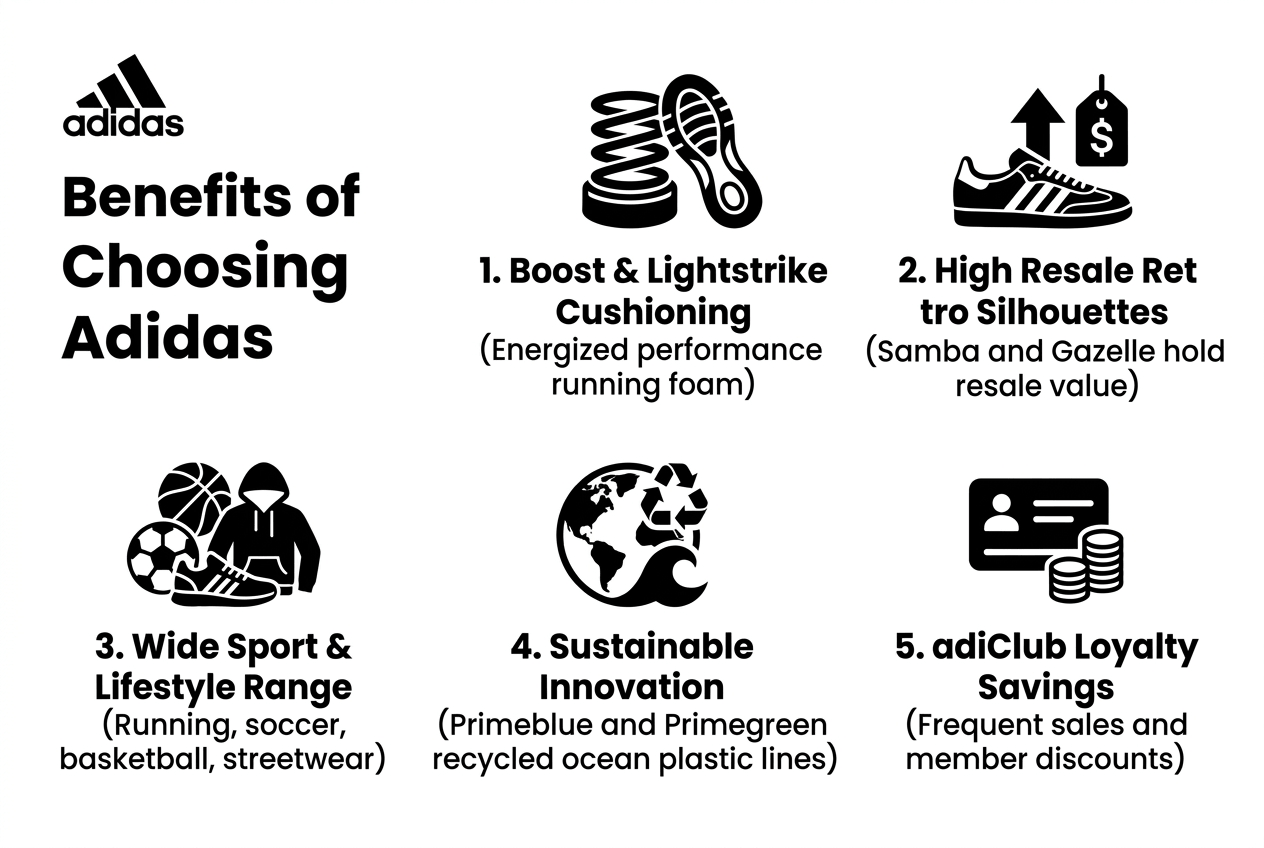
- Boost and Lightstrike cushioning genuinely compete with the best running foam on the market
- Retro silhouettes like the Samba and Gazelle hold resale value better than most sneaker lines
- Wide range spans running, soccer, basketball, and lifestyle in one place
- Sustainability push includes Primeblue and Primegreen lines made with recycled ocean plastic
- Frequent sales and a loyalty program (adiClub) chip away at that higher sticker price
What Adidas Actually Is
Adidas was founded in 1949 in Herzogenaurach, Germany, and it has grown into one of the two dominant global sportswear brands, generating tens of billions in annual revenue. The three-stripe logo is one of the most recognized marks in retail, full stop, not just in sneakers.
The brand splits its identity three ways these days: performance gear built for running and soccer, a lifestyle line riding the current wave of 90s and Y2K nostalgia, and collaborations that swing from Stan Smith reissues to high-fashion partnerships. That range is a strength, though it also means quality and price can vary a lot depending on which corner of the catalog you're shopping.
What Adidas Offers
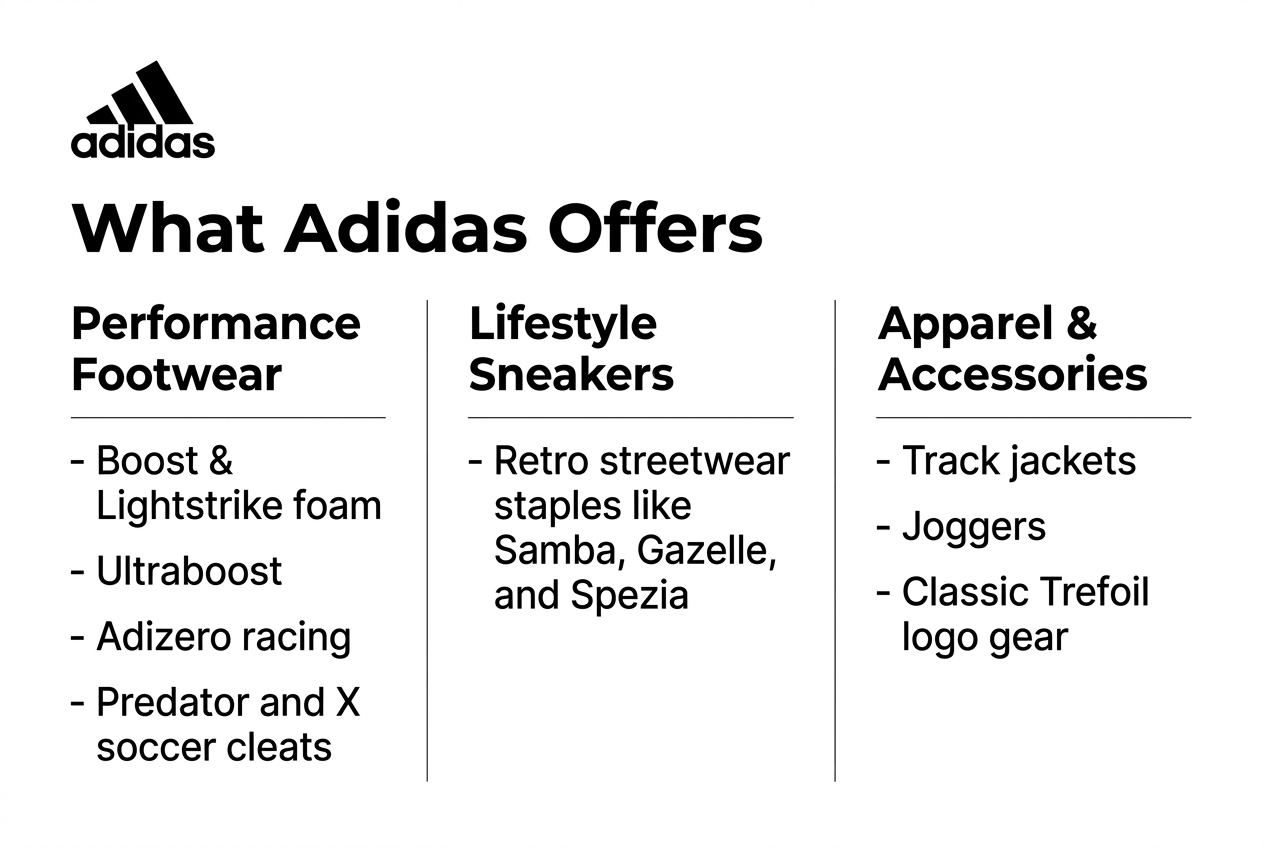
Performance Footwear
Boost cushioning remains the standout here, a foam that returns energy back into each stride rather than just absorbing shock. Ultraboost and the Adizero racing line both lean on it, and soccer cleats under the Predator and X lines still carry serious credibility on actual pitches.
Lifestyle Sneakers
This is where Adidas has genuinely outpaced Nike lately. The Samba, Gazelle, and Spezia went from soccer-training shoes to full-blown streetwear staples, and demand has stayed remarkably steady rather than fading after one viral season.
Apparel and Accessories
Track jackets, joggers, and the classic trefoil logo gear round out the catalog, priced more accessibly than the footwear side. Quality here is solid rather than exceptional, built for everyday wear rather than technical performance.
Is Adidas Worth the Price? A Fair Look
Here's where a lot of reviews get lazy and just say "yes, it's a good brand" without digging in.
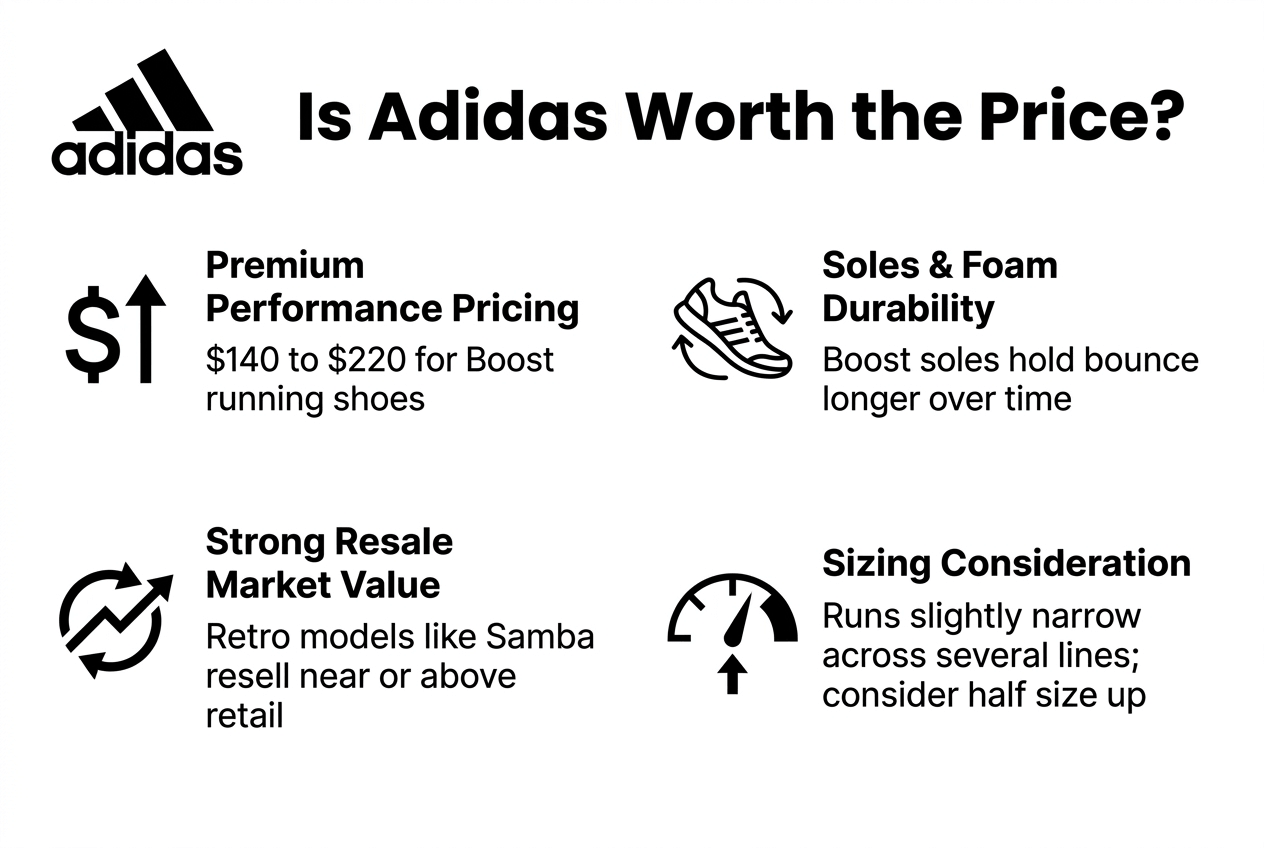
Running shoes with Boost cushioning typically run $140 to $220, which sits right in line with Nike's premium tier, not below it. You're paying performance-brand pricing, not budget pricing.
Where the value case gets stronger is durability and resale. Boost soles hold their bounce longer than a lot of competing foams, and retro lifestyle sneakers like the Samba routinely resell close to retail, sometimes above it during a hype cycle. Sizing runs slightly narrow across several lines too, so ordering half a size up is a common enough tip that it's worth planning for before you buy.
Adidas vs. Competitors
| Parameter | Adidas | Nike | Puma |
|---|---|---|---|
| Cushioning Technology | Boost and Lightstrike, strong energy return | Air and ZoomX, lighter and more race-focused | Nitro foam, solid but less proven long-term |
| Lifestyle Sneaker Demand | Very high, Samba and Gazelle driving retro boom | High, Dunk and Air Force 1 remain dominant | Moderate, smaller cultural footprint |
| Sizing Consistency | Runs slightly narrow in several lines | Generally true to size | Runs true to size on most models |
| Price Range | $70 to $220 across footwear | $80 to $250 across footwear | $60 to $180, generally cheaper |
| Sustainability Efforts | Primeblue and Primegreen recycled lines | Nike Move to Zero initiative | Puma's RE:SUEDE and biodegradable pilots |
Adidas and Nike trade the top spot depending on the category, Nike still leads in performance running for serious racers, while Adidas has the stronger grip on street style right now. Puma undercuts both on price but hasn't matched either brand's cultural pull or the depth of performance technology, making it more of a budget alternative than a true head-to-head rival.
Shopping Experience and What to Expect
The Adidas website is straightforward to navigate, with filters for sport, size, and even sustainability line, which is a nice touch if that factors into your buying decision. Shipping is reliable for US orders, and the adiClub loyalty program unlocks early access to drops and member-only discounts that genuinely add up over a year of purchases.
Returns run a standard 30-day window, and customer service handles exchanges without much friction for a brand this size. The main gripe shoppers raise is stock, hyped releases like Samba collaborations sell out within minutes, which has less to do with the platform and more to do with how much demand the brand has built.
Adidas Pros and Cons
| Pros | Cons |
|---|---|
| Boost cushioning genuinely competes with the best on the market | Premium pricing sits on par with Nike, not below it |
| Retro sneakers hold or exceed resale value | Sizing runs narrow on several lines, requiring guesswork |
| Wide catalog spans performance, lifestyle, and sport-specific gear | Hyped drops sell out fast, frustrating casual shoppers |
| Genuine sustainability lines using recycled materials | Apparel quality is solid but not standout |
| Loyalty program adds real, ongoing discounts | International shipping options are more limited than domestic |
Frequently Asked Questions
Is Adidas better than Nike?
Neither wins outright. Nike leads in serious performance running, Adidas currently leads in street style and retro sneaker demand. The better pick depends on what you're buying it for.
Does Adidas run true to size?
Not always. Several lines, especially Boost running shoes, run slightly narrow, so sizing up half a size is a common workaround shoppers rely on.
Is Adidas Boost cushioning actually good?
Yes, it's one of the more respected foams in the industry for energy return and long-term durability, which is why it still anchors the brand's premium running line.
Are Adidas sneakers a good resale investment?
Certain retro models, particularly the Samba and Gazelle, resell close to or above retail during hype windows, though this varies from release to release.
Does Adidas offer easy returns?
Yes, the brand offers a standard 30-day return window on most items purchased directly through its site.
Final Verdict
Adidas earned its current momentum the hard way, decades of performance credibility paired with a lifestyle line that caught a cultural wave at exactly the right time. It is not the cheaper option, and stock on hyped releases can be genuinely frustrating, but the quality backing that three-stripe logo holds up under real scrutiny.
If performance running is your priority, put Boost cushioning head-to-head against Nike's ZoomX before deciding. If it's street style you're after, Adidas is arguably having its best cultural moment in years, and the resale numbers on its retro line back that up.