
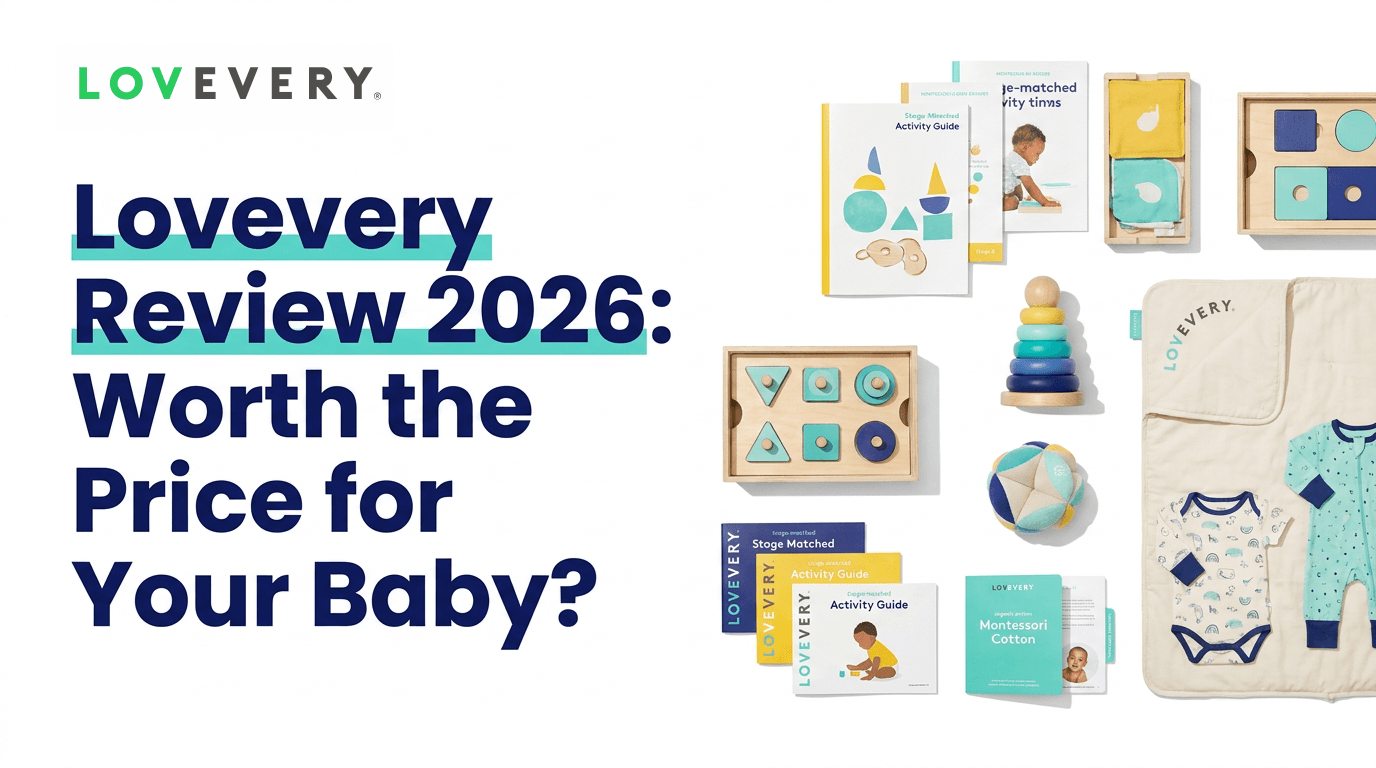
Somewhere between the third 3 a.m. feeding and a pile of plastic toys that make noise for no reason, most new parents start asking the same question: is there a smarter way to buy toys? That question is basically the whole reason Lovevery exists, and it has turned into a simple idea. Age-matched, research-backed play kits shipped to your door, into one of the most talked-about baby brands online.
But a single kit can run close to $80, and a full year adds fast. So, before you add another subscription to the pile, we break down what you actually get, how it stacks against the two brands parents compare it to most, and whether the price tag holds up.
Benefits of Choosing Lovevery
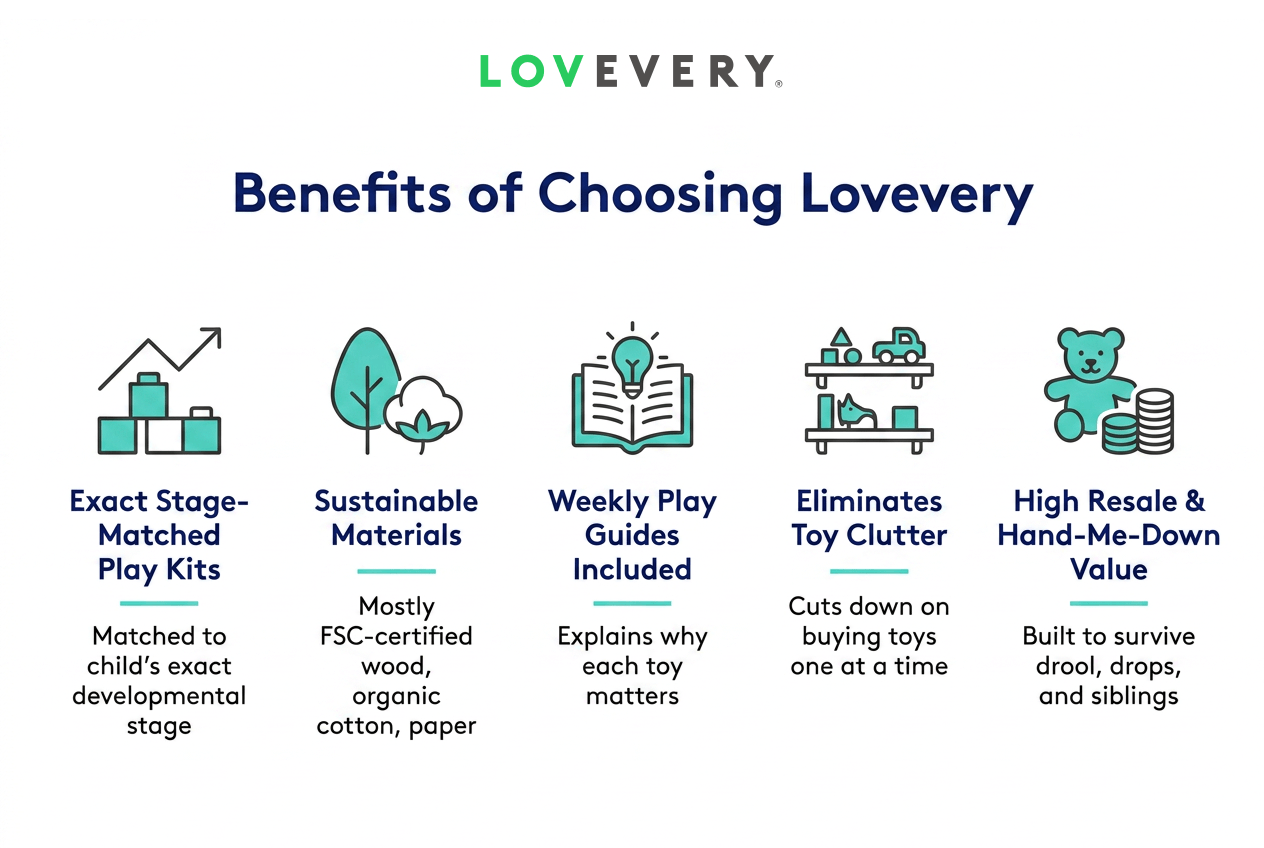
- Kits matched to your child's exact developmental stage, not a broad age range
- Materials lean sustainable, mostly wood, organic cotton, and FSC-certified paper
- A play guide comes in every box explaining why each toy matters, not just how to use it
- Cuts down on the guesswork (and the clutter) of buying toys one at a time
- Resale value holds up decently since pieces are built to survive drool, drops, and siblings
What Lovevery Actually Is
Lovevery launched in 2015 built around a fairly simple premise, that most baby toys are designed to sell, not to actually support a child's brain development at that exact stage. Every kit gets built with input from child development researchers, occupational therapists, and Montessori educators, then shipped on a schedule tied to your baby's age rather than a generic quarterly drop.
The lineup now stretches from newborn all the way to age 4, with kit names like The Charmer, The Senser, and The Thinker hinting at what skill each one targets. Early kits ship every two months since babies change so fast in that window, then space out to every three months once your child hits toddlerhood.
What Lovevery Offers
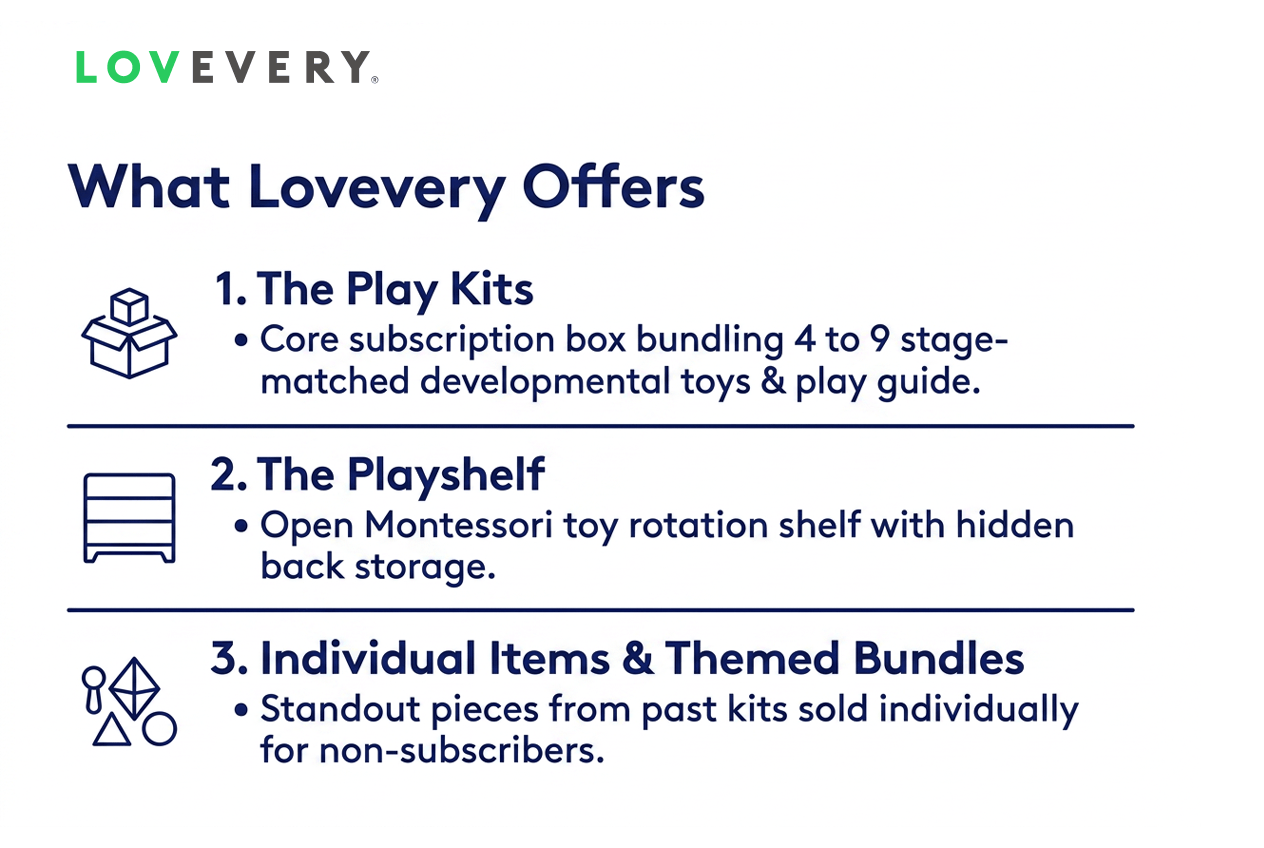
The Play Kits
This is the core product, and the one most parents start with. Each box bundles four to nine toys around a specific developmental theme, sensory exploration, fine motor skills, early language, and includes a play guide walking you through how to use everything week by week.
The Playshelf
A newer, pricier addition built specifically for Montessori-style toy rotation. The front is an open shelf for a curated handful of toys, the back hides the rest in storage, so a toddler faces fewer choices at once and actually engages with what is out.
Individual Items and Bundles
Not ready for a subscription? Lovevery sells standout pieces from past kits individually too, along with themed bundles, which works well for gift-givers or parents who just want one or two specific toys rather than the full box.
Is Lovevery Worth the Price? The Honest Answer
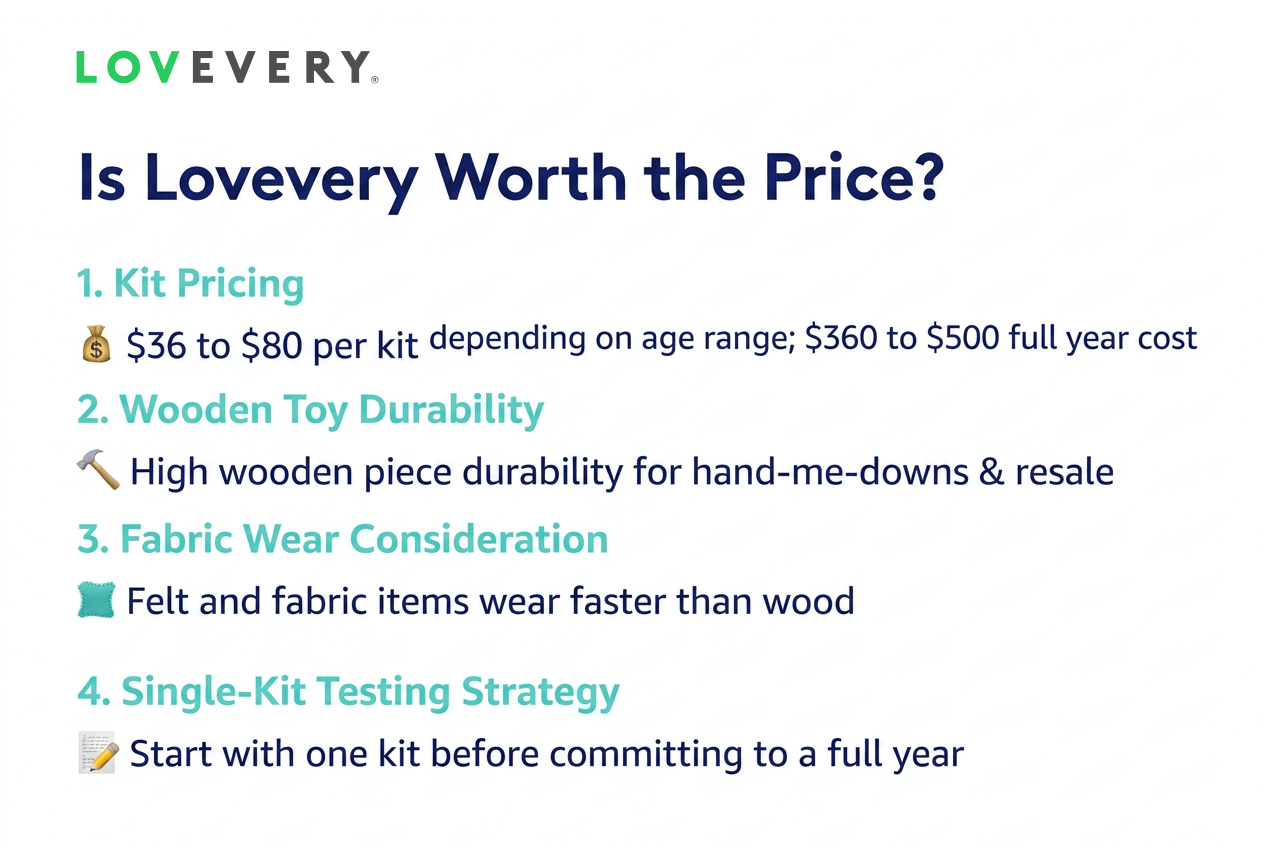
Here is the question that actually matters before you commit. A single kit runs somewhere between $36 and $80 depending on the age range, and across a full year that lands around $360 to $500. That is not small money for toys.
What tips it for a lot of parents is the durability math. Wooden pieces get handed down between siblings or resold in decent shape, which softens the per-toy cost over time. Felt and fabric items wear faster and don't hold value as well, worth knowing before you assume every single piece ages gracefully. If your budget is tight, starting with one kit before committing to a full year is the smarter test.
Lovevery vs. Competitors
| Parameter | Lovevery | KiwiCo | Monti Kids |
|---|---|---|---|
| Age Range Covered | Newborn through age 4 | Ages 0 to 16, broader STEM focus | Newborn through age 3 |
| Educational Approach | Montessori and Waldorf-inspired, developmental research | STEM, art, and engineering projects | Strict Montessori certification |
| Price Per Kit | Roughly $36 to $80 | Roughly $20 to $35 | Roughly $120 to $150, higher tier |
| Material Quality | Sustainably sourced wood, organic textiles | Mixed materials, more plastic and craft supplies | Premium wood, museum-quality pieces |
| Best For | Parents wanting whole-child development guidance | Older kids and hands-on project lovers | Purist Montessori households, higher budget |
Lovevery sits in a comfortable middle ground here. KiwiCo costs less and covers a wider age span, but it leans harder into craft projects than pure developmental toys, which suits older kids better than infants. Monti Kids goes deeper on strict Montessori methodology, but at a price point that puts it out of reach for a lot of families. Lovevery lands in between on both cost and philosophy, which is exactly why it built such a loyal following.
Ordering Experience and What to Expect
Signing up takes a few minutes, you enter your baby's birthdate and the site calculates which kit ships first. Boxes arrive well packaged, with the kit name printed right on the outside and everything inside organized so you know what to open first.
Customer service handles pauses, skips, and cancellations without much friction, a detail that matters since not every family wants every single kit. Shipping runs reliably on schedule for US customers, though occasional delays do pop up around holiday peaks, so building in a little buffer before a birthday or big milestone is a smart move.
Lovevery Pros and Cons
| Pros | Cons |
|---|---|
| Toys matched precisely to developmental stage, not generic age brackets | Price per kit runs noticeably higher than big-box toy shopping |
| High-quality, mostly sustainable materials built to last | Felt and fabric pieces show wear faster than wood ones |
| Detailed play guides explain the reasoning behind each toy | Some kits feel stronger than others within the same age range |
| Easy to pause, skip, or cancel without hassle | Full-year cost adds up fast for budget-conscious families |
| Strong resale and hand-me-down value | Shipping delays can occur during high-demand periods |
Frequently Asked Questions
Is Lovevery actually worth the money?
For families who value research-backed, sustainable toys and want the guesswork removed, yes. For those on a tighter toy budget, starting with a single kit before committing to a year is the safer test.
How does Lovevery decide which kit to send?
You enter your child's birthdate at signup, and the platform matches kits to their current developmental stage, adjusting the schedule as they grow.
Can I cancel a Lovevery subscription anytime?
Yes, you can pause, skip a kit, or cancel through your account without penalty, which makes testing the waters lower risk than it first appears.
Is Lovevery better than KiwiCo?
It depends on the age and goal. Lovevery focuses on whole-child developmental toys for younger kids, while KiwiCo leans into STEM and craft projects that suit older children better.
Are Lovevery toys really sustainable?
Most pieces use FSC-certified wood, organic cotton, and recycled materials, though fabric and felt components wear down faster than the wooden pieces.
Final Verdict
Lovevery earned its reputation by solving a real problem, the endless guesswork of picking the right toy at the right time. It is not cheap, and it is not going to be the right fit for every family's budget, but the research behind each kit and the durability of the materials genuinely set it apart from a random toy aisle haul.
If you are on the fence, start with a single kit near your child's current age before locking into the full subscription. That gives you a real sense of the quality and the pacing without committing a few hundred dollars upfront, and it is usually enough to tell you whether Lovevery earns a spot in your routine.