
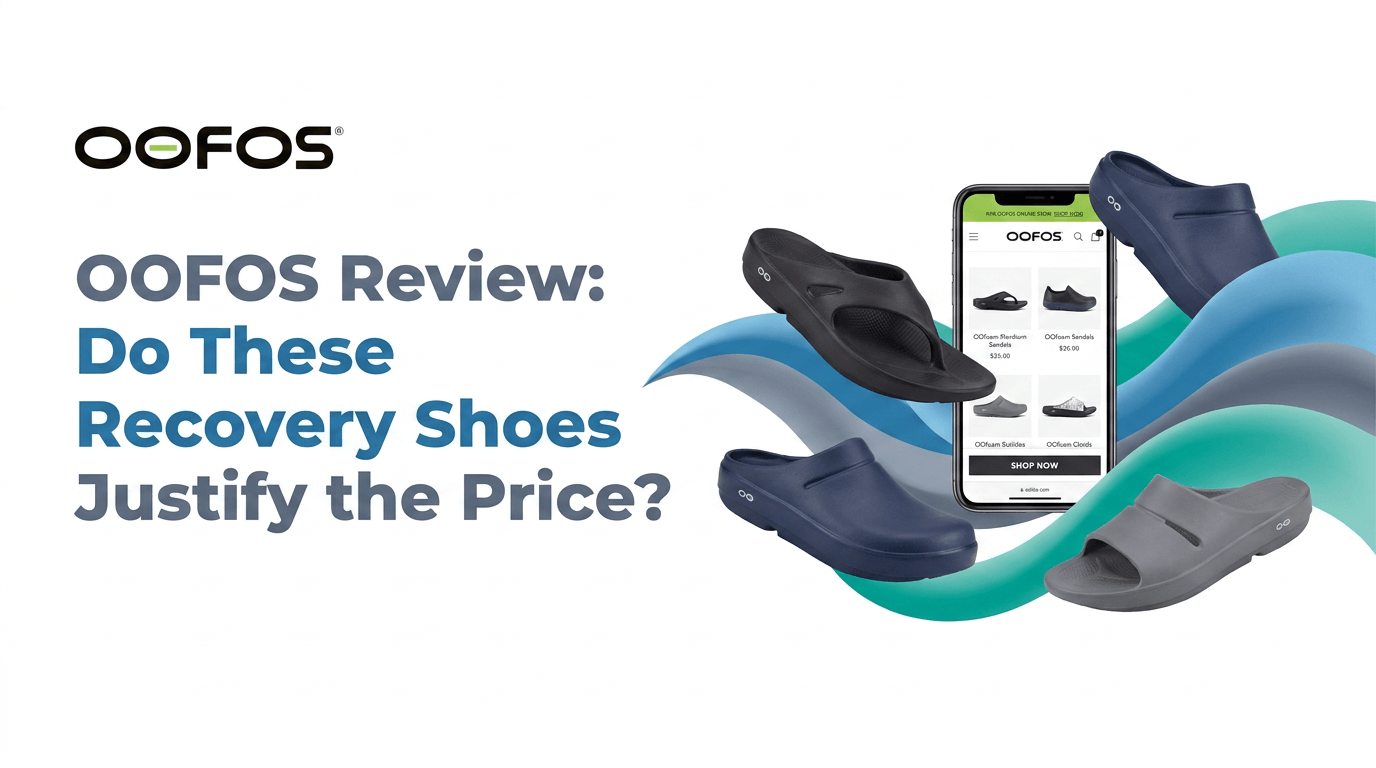
Walk into any running store or hospital break room and you'll spot them. That thick, foamy sole. The slightly odd bounce when someone walks across the room in them. OOFOS has basically become shorthand for "my feet are done for the day," and at $60 to $140 a pair, that's not exactly pocket change for what looks, at first glance, like a shower sandal.
So does the foam science hold up? Mostly, yes, for the people it's actually built for. Runners recovering from long miles, nurses finishing a 12-hour shift, anyone dealing with plantar fasciitis. But there's a real gap between what OOFOS claims and what a sandal made of foam can realistically deliver over two or three years. Let's break it down properly.
Why People Keep Buying OOFOS
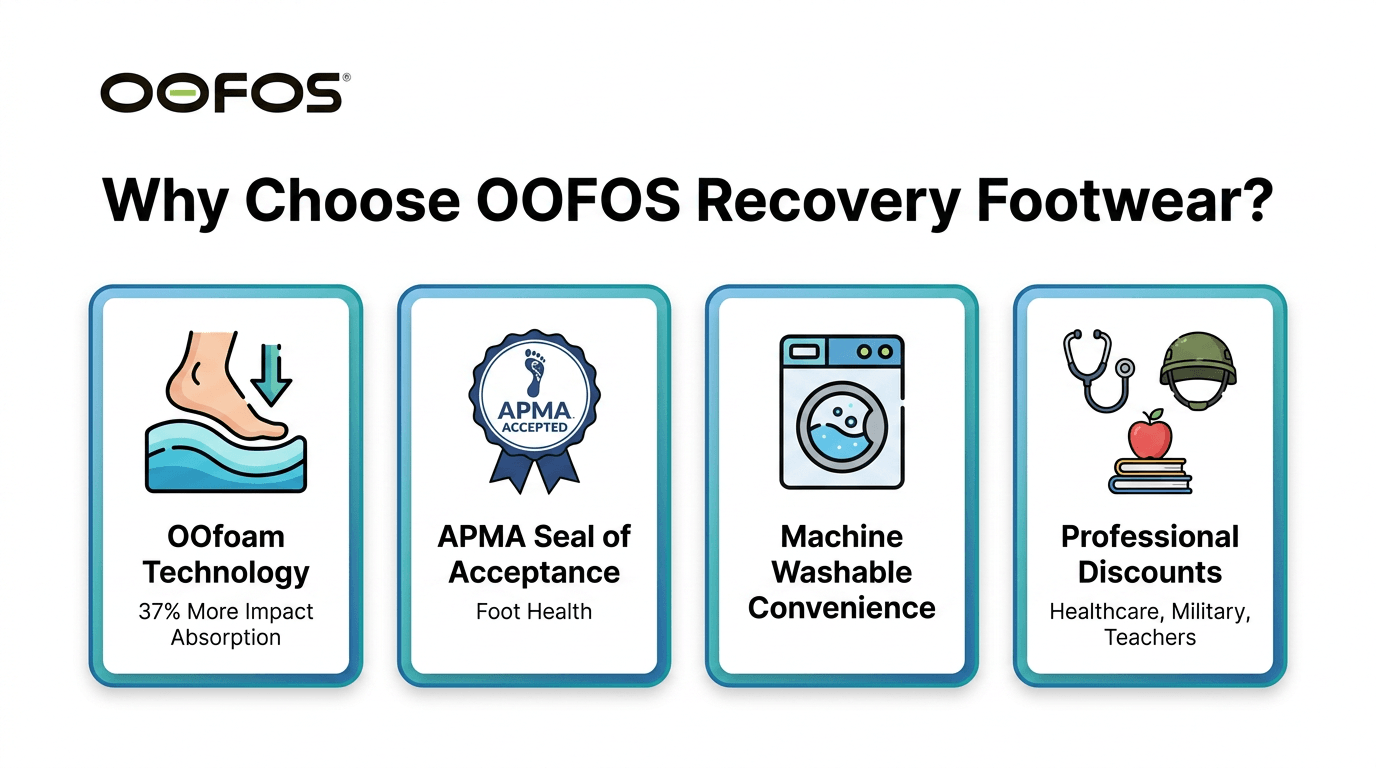
Before the deep dive, here's what actually draws buyers to this brand in the first place.
- OOfoam claims 37% more impact absorption than standard foam
- APMA Seal of Acceptance on select styles
- Machine washable, which matters more than you'd think
- Strong professional discounts for healthcare, military, and teachers
- Backed by Deckers, the company behind HOKA and UGG
What OOFOS Sells
The Recovery Lineup
The catalog isn't huge, and that's kind of the point. Recovery sandals like the OOriginal, OOlala, and OOahh make up the bulk of it. There's a sport slide version too, plus a clog (the OOCloog) and a couple of closed-toe options, the OOmg Low being the one that shows up most in reviews. Men's and women's sizing across most of it. No half sizes anywhere, which becomes a bigger deal later in this review.
What OOfoam Actually Does
Here's the core pitch. OOFOS says its proprietary foam absorbs 37% more impact than the foam in a typical shoe or sandal. That number comes from the brand's own testing, worth flagging up front. Some styles also carry the APMA Seal of Acceptance, but that seal means the product meets certain foot-health standards, not that podiatrists are lining up to recommend it specifically. Don't read "APMA Seal" as "doctor endorsed." It's not quite that.
Pricing and Current Promotions
Base Pricing by Category
| Category | Typical Price |
|---|---|
| Recovery sandals & slides | $60–$80 |
| Clogs | $80–$100 |
| Closed-toe shoes (OOmg Low) | $100–$140 |
| Hoka Recovery Sandal (comparison) | $50–$70 |
| Kane Revive (comparison) | $75 |
Professional and First-Time Discounts
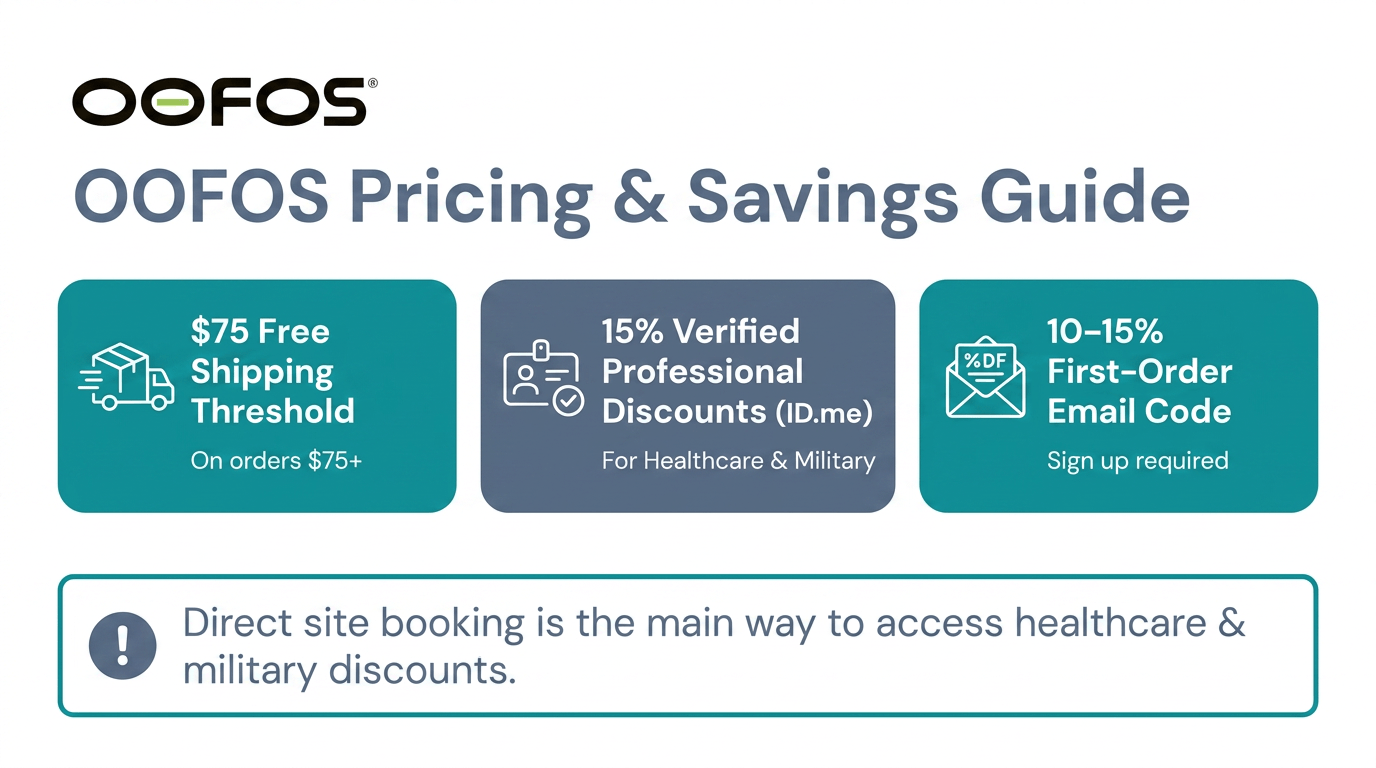
Free shipping starts at $75. There's a 15% discount for military, students, teachers, and healthcare workers, verified through ID.me typically. Sign up for emails and you'll get 10 to 15% off your first order. Referral program gets you a $20 credit. Seasonal sales happen but rarely go past 30% off, even during bigger promotional windows.
Compared to Hoka's own recovery sandal, OOFOS runs a bit higher. And that's a strange dynamic, both brands sitting under the same Deckers umbrella, competing against each other for the same recovery-shoe dollar. Buying direct is really the only place to guarantee access to those professional discounts, most third-party retailers don't offer them.
Sizing, Fit, and the Whole-Size Problem
The Whole-Size Dilemma
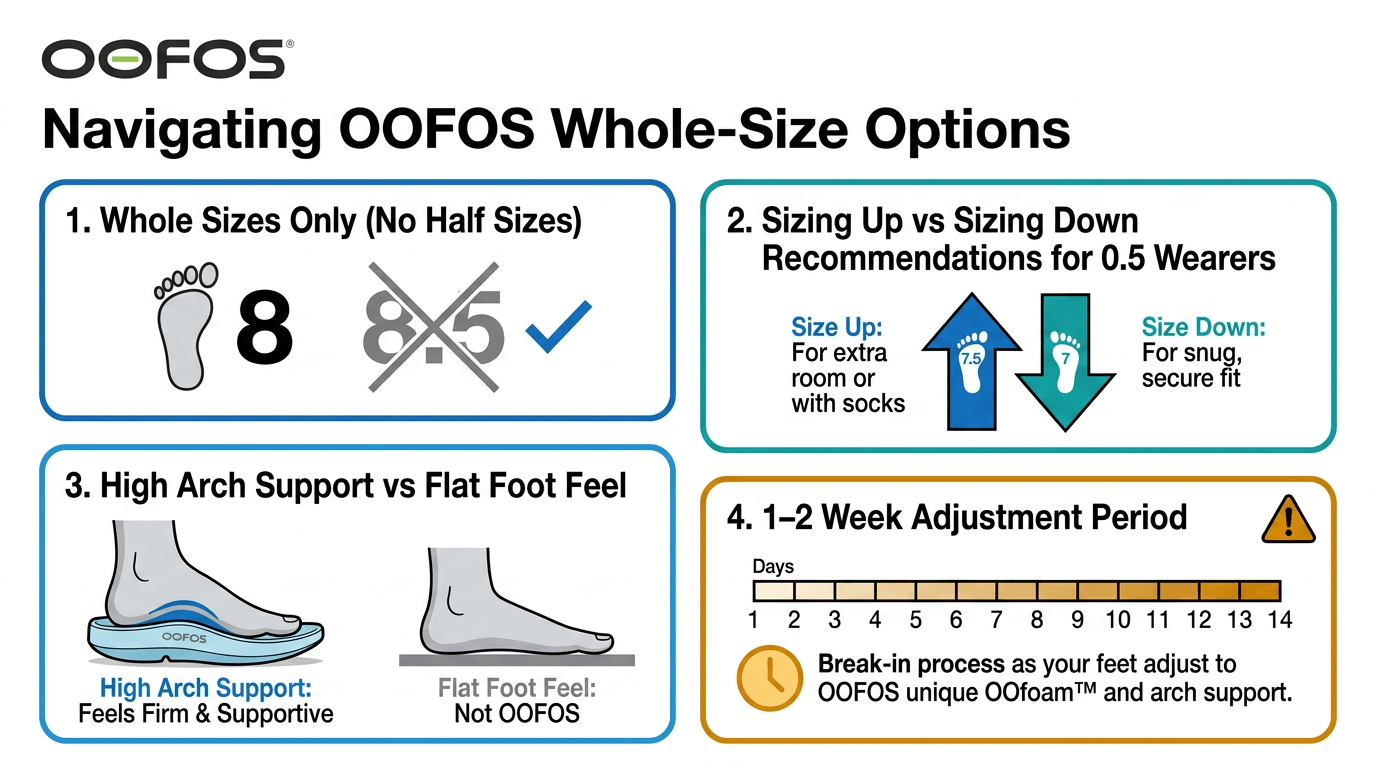
No half sizes. That's the headline here, and it's a genuine problem if you wear a 7.5 or an 8.5. Buyers in that spot end up guessing, sizing up for a looser fit or down for something snugger, and the reviews are split roughly down the middle on which direction works better. There isn't a clean rule that applies to everyone.
Arch Support and Foot Shape
The OOfoam footbed doesn't feel like cork or standard EVA. It's springier, a little unusual at first. High-arch wearers tend to like it right away. Flat feet, it's more of a mixed bag, some people love the extra support, others find it presses in the wrong spot. Give it a week or two before deciding it's not for you. The adjustment period is real.
Durability: Does OOfoam Last?
Foam Compression Reality
This is the part OOFOS doesn't lead with in its marketing. Daily wearers report noticeable compression somewhere between six and twelve months. The bounce softens, the support flattens out, and eventually it starts to feel more like a regular flip flop than a recovery tool. That's fairly standard for foam of this type, to be fair. But at $70 a pair, a shoe that meaningfully degrades within a year changes the math on whether this is actually a good value.
Warranty and Premature Wear
One-year warranty, defects only. Compression from normal use isn't covered, and that's an important distinction buyers should understand before they order. If a strap snaps or the sole delaminates early, that's warranty territory. If the foam just goes flat after eight months of daily wear, that's expected behavior, not a defect.
Shipping, Returns, and Warranty
The 30-Day Return Window
Thirty days, unworn condition, original packaging required. Buying direct means you cover return shipping yourself, and on a $70-plus order that's a real cost if the sizing gamble doesn't pay off.
Buying Direct vs. REI
REI offers a full year to return items, and covers the shipping. For a brand with a known sizing quirk like the whole-sizes-only issue, that's a meaningful safety net. First-time buyers unsure of their size are honestly better off starting there, even if it means missing out on OOFOS's own professional discount program.
OOFOS vs. the Competition
Recovery footwear isn't a crowded category, but it's not empty either. Here's how OOFOS stacks up against the names buyers usually compare it to.
| Brand | Price Range | Half Sizes | Key Angle |
|---|---|---|---|
| OOFOS | $60–$140 | No | OOfoam impact absorption, APMA Seal |
| Hoka Recovery Sandal | $50–$70 | No | Running brand halo, slightly cheaper |
| Kane Revive | ~$75 | Yes | Sustainability focus, newer to market |
| Birkenstock Arizona | $100–$150 | Yes | Cork footbed, longer lifespan, fashion crossover |
| Crocs | $50–$60 | N/A | Cheap, no recovery claims at all |
OOFOS vs. Hoka Recovery Sandal
Same parent company, oddly enough. Hoka's version costs a bit less and leans on the running-brand reputation more than any specific foam technology claim. Arch support is lighter than what OOFOS offers though, so it's not a perfect substitute for someone with real foot pain.
OOFOS vs. Kane Revive
Kane's a newer name, built around a sustainability story and offering half sizes, which already puts it ahead for anyone who's been burned by OOFOS's whole-size limitation. Price is close to OOFOS's lower end. Less brand history behind it, for what that's worth.
When Cheaper Options Make Sense
If recovery science isn't really the priority and you just want something comfortable to wear around the house, Crocs at $50 to $60 does most of that job for less money. You're not getting the impact-absorption claims, but plenty of people don't need them anyway.
Customer Reputation and Common Complaints
Runners and healthcare workers are the loudest fans, and the praise lines up pretty closely across both groups. Less soreness after long shifts. Real relief for plantar fasciitis, or at least that's what a lot of people report. The complaints cluster in a few predictable spots. Foam compression tops the list, straps breaking on the sandal versions comes up fairly often too, and there's a recurring line in running forums that goes something like "great for eight months, then completely flat." Can't confirm that's universal. It shows up enough to take seriously though.
Price-per-month math bothers some buyers more than others. A $70 sandal that lasts eight months works out to under $9 a month, reasonable for some. For someone expecting three years out of it, that same math feels like a rip-off.
Who Should Buy from OOFOS
Runners logging serious weekly mileage, nurses and healthcare workers on their feet for 12-hour stretches, and people managing plantar fasciitis are the clearest fit, especially if they wear a whole size already.
Skip it if you're a half-size wearer with a narrow foot, if you're expecting multi-year durability, or if $50 is your real ceiling. OOFOS isn't a medical device either. Anyone with a serious foot condition should be talking to a podiatrist, not just buying sandals off the internet and hoping.
Frequently Asked Questions
Do OOFOS run true to size?
Kind of, but there's no half-size option, so "true to size" only gets you so far. Some buyers size up, some size down. No universal rule here, unfortunately.
How long do OOFOS sandals last?
Somewhere between six and eighteen months depending on how often you wear them. Daily wearers see compression sooner. Occasional wearers get more mileage out of the same pair.
Can I wear OOFOS all day?
Plenty of people do, especially nurses and retail workers. Just know the foam won't feel the same at month ten as it did on day one.
Are OOFOS good for plantar fasciitis?
Many buyers report relief, yeah. But OOFOS isn't a medical device, and results vary a lot person to person. Worth trying one pair before committing further.
Should I buy OOFOS direct or from REI?
REI if you're unsure about sizing, since their return window is longer and returns are free. Direct if you already know your size and want professional discounts.
Final Verdict
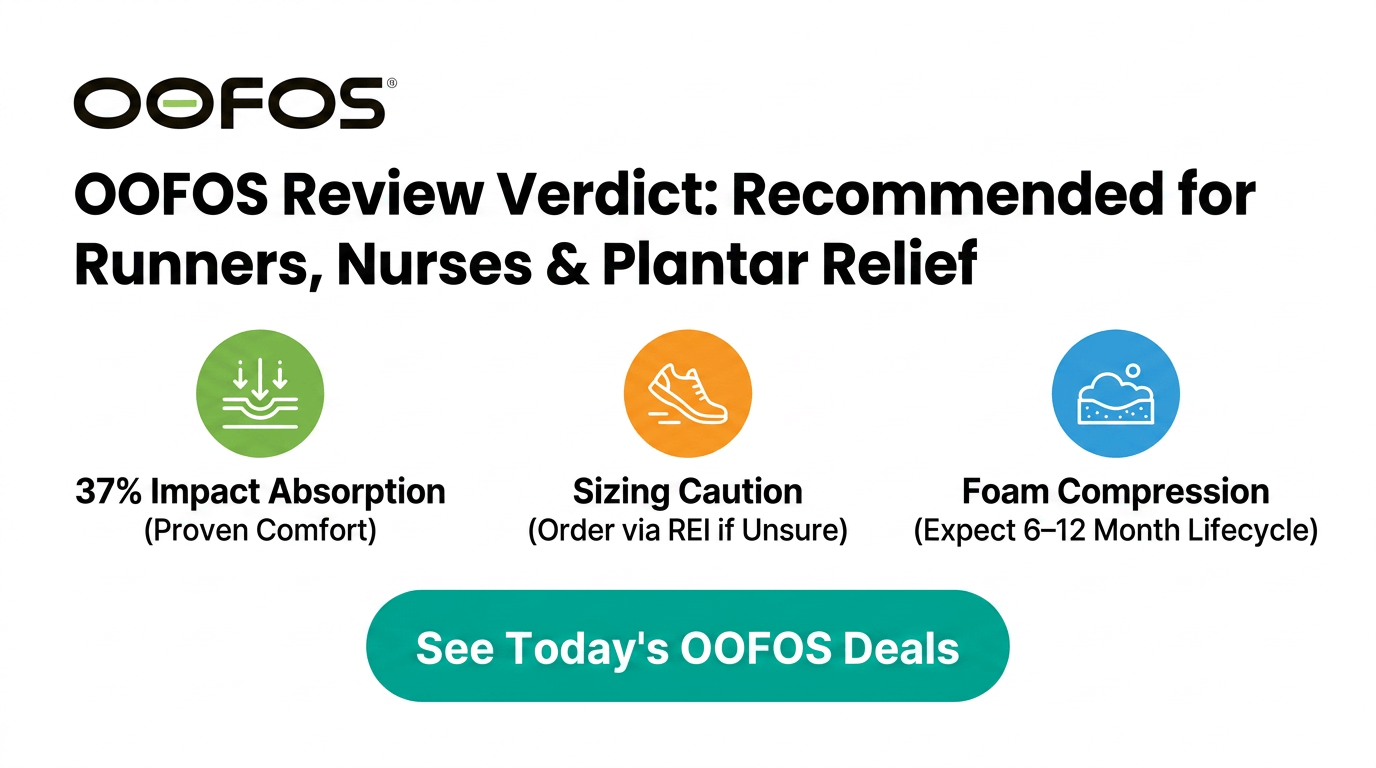
OOFOS earns its reputation with the people it's actually built for. Runners, healthcare workers, anyone whose feet take a real daily beating. The impact-absorption claims aren't nothing, and the APMA Seal at least means somebody checked the science before slapping a sticker on the box. That's more than most recovery-adjacent products can say.
Where it gets shakier is the durability-to-price ratio. Foam that noticeably compresses within a year, on a $70-plus pair of sandals, isn't a small asterisk. It's the thing that should shape your decision. Know your size already? Buy direct and grab the professional discount if you qualify. Not sure? REI's return window removes basically all the risk. And if you just want cheap comfort without the recovery-science price tag, Crocs or a similar budget slide covers that need for a fraction of the cost.