
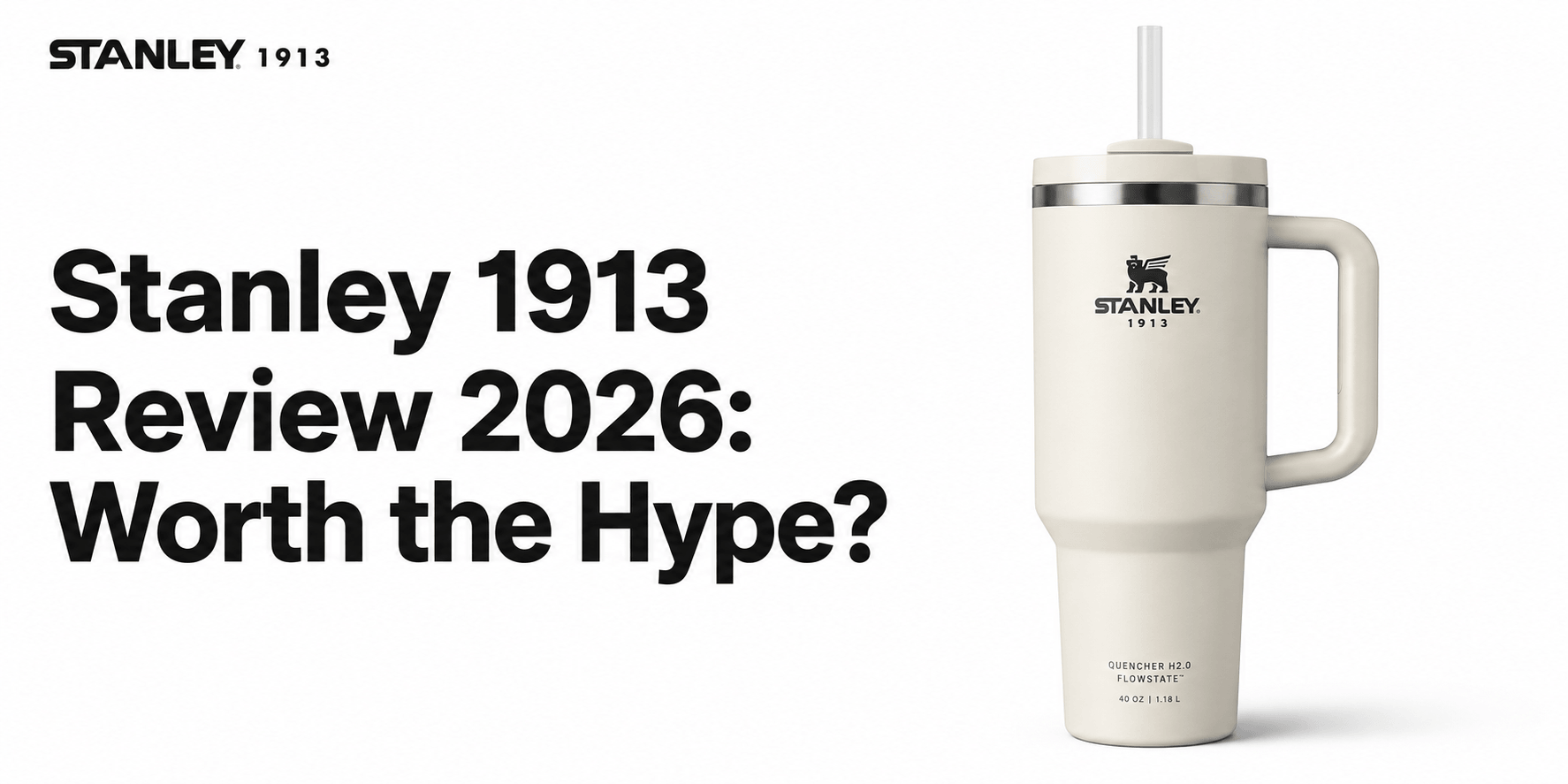
A water bottle shouldn't really need a hashtag with 7 billion TikTok views, and yet here we are. Stanley 1913 went from a century-old brand built for construction workers to the single most talked-about drinkware company on the internet, largely on the back of one product, the 40-ounce Quencher tumbler.
That kind of viral run makes plenty of people skeptical, is the hype backed by anything real, or is this just marketing riding a lucky trend? We looked at what's actually inside the insulation claims, the durability, and whether the brand's century of heritage shows up in the product or just the ad copy.
Benefits of Choosing Stanley 1913
- Double-wall vacuum insulation keeps drinks cold for hours, sometimes over a day
- Built from recycled stainless steel, with many tumblers using 90% recycled material
- Wide range of colors and sizes across the Quencher, IceFlow, and classic lines
- Dishwasher safe on most models, a genuine convenience for daily use
- Backed by a lifetime warranty reflecting the brand's "Built For Life" promise
What Stanley 1913 Actually Is
Stanley has been manufacturing rugged drinkware since 1913, originally built for outdoorsmen and construction workers who needed something that could survive genuinely rough daily use. The brand pivoted its marketing toward everyday consumers around 2020, and the Quencher tumbler quickly became a cultural phenomenon most people weren't expecting.
The numbers back up the hype at least commercially, revenue grew from roughly $73 million in 2019 to well over $800 million a few years later, and the Quencher H2.0 alone holds a rating above 4.8 stars across tens of thousands of Amazon reviews. That said, viral popularity and genuine product quality aren't automatically the same thing, which is exactly why a closer look matters.
What Stanley 1913 Offers
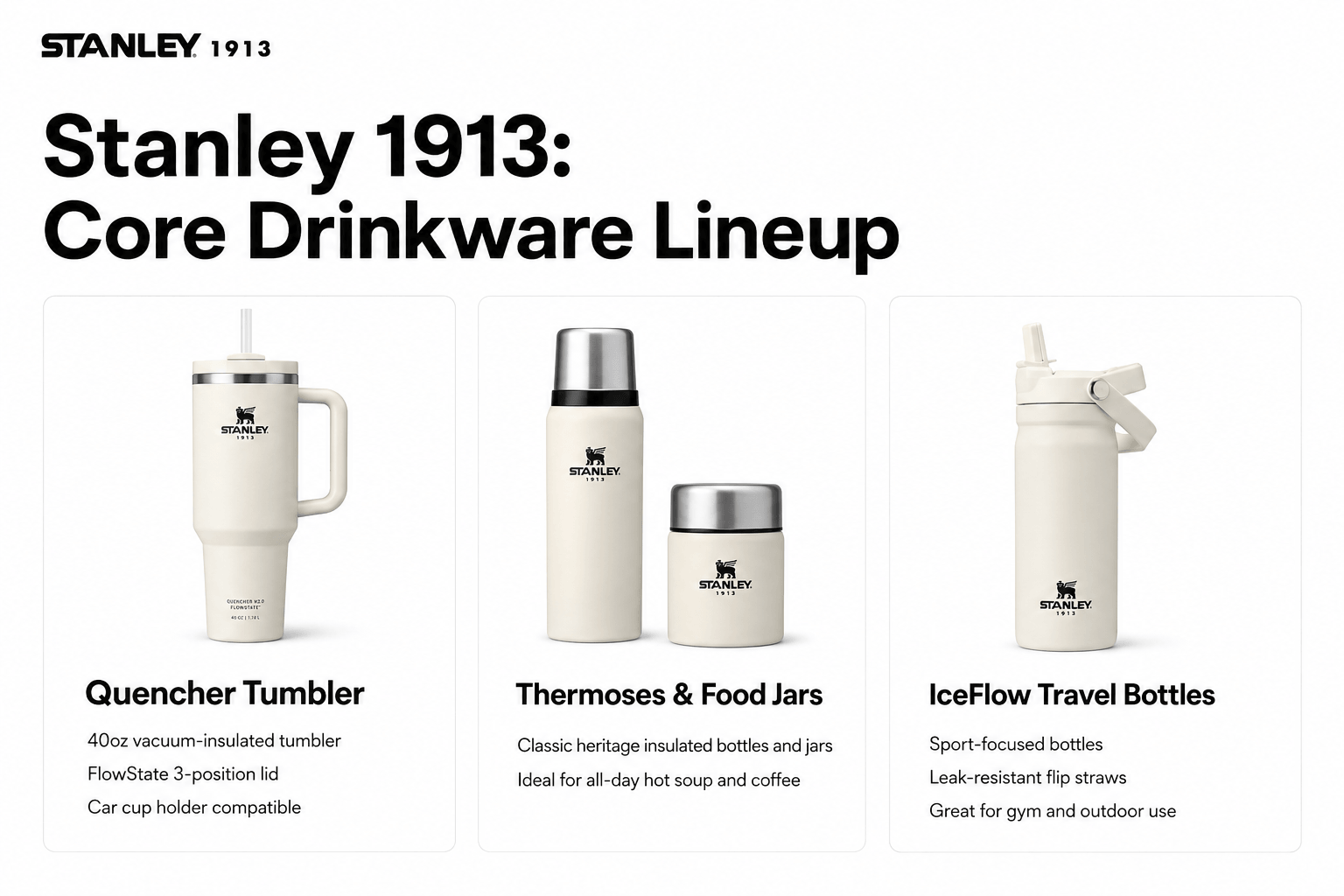
The Quencher Tumbler
The product that started it all, a 40-ounce double-wall vacuum insulated tumbler with a comfort-grip handle and car cup holder compatibility. The FlowState lid offers three positions, a straw opening, a standard spout, and a full-cover top, while the newer ProTour flip-straw lid adds a leak-proof locking mechanism.
Thermoses and Food Jars
Beyond the tumbler, Stanley makes insulated food jars and classic thermoses built for hot soup or coffee that stays hot through a full workday. These lean closer to the brand's original heritage products than the trend-driven tumbler line.
IceFlow and Travel Bottles
A more streamlined bottle line aimed at sportier use than the tumbler, still built on the same vacuum insulation technology but in a shape better suited to a gym bag or bike cage than a car cup holder.
Is Stanley 1913 Worth the Hype? An Honest Test
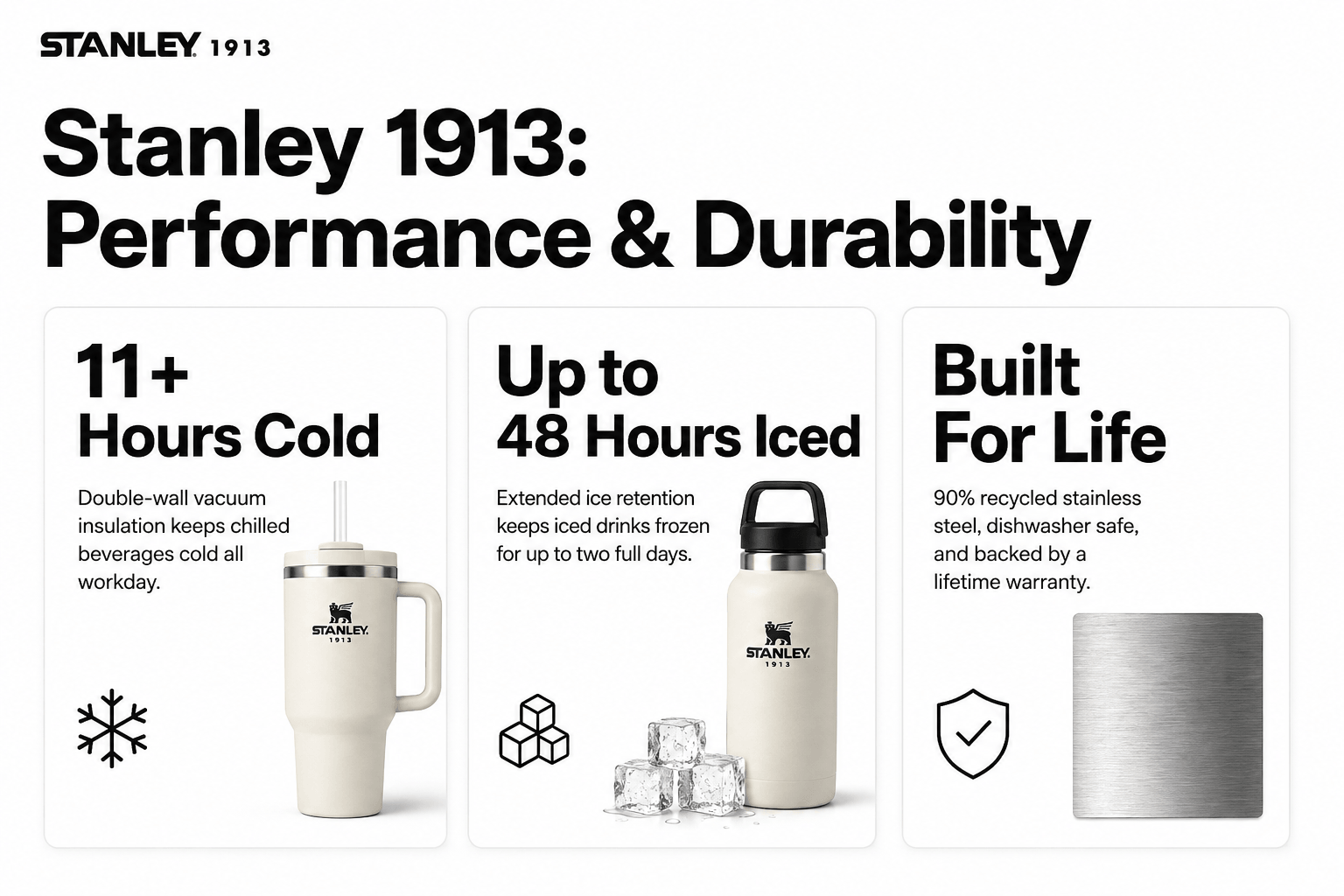
This is the question that actually matters after the trend cools off a little. On insulation, Stanley delivers close to what's advertised, drinks stay cold for roughly 11 hours and iced drinks can stay cold up to 48 hours in real testing, genuinely competitive numbers in the category.
Where the picture gets more mixed is durability and leak resistance. Independent long-term testing found the Quencher isn't the most leak-proof option on the market, YETI generally wins that comparison, and it isn't the lightest either, with Owala and Simple Modern both weighing less for a similar capacity. Some reviewers who tested it over 12 months noted the straw lid in particular shows wear faster than the tumbler body itself. None of that erases the strong points, insulation performance, sturdy build, and brand backing genuinely deliver, but "best at everything" isn't quite accurate either.
Compare Stanley Tumbler Prices
Stanley 1913 vs. Competitors
| Parameter | Stanley 1913 | YETI | Owala |
|---|---|---|---|
| Insulation Performance | Strong, cold for 11+ hours, iced up to 48 | Excellent, among the best in the category | Good, slightly less than Stanley on extended tests |
| Leak Resistance | Moderate, straw lids show occasional wear | Best in class, rarely leaks | Good, splash-resistant flip design |
| Weight | Heavier than several competitors | Comparable weight to Stanley | Noticeably lighter for similar capacity |
| Price Range | $35 to $50 for most tumblers | $40 to $65, generally pricier | $30 to $45, slightly cheaper on average |
| Color and Style Variety | Extremely wide, frequent limited-edition drops | Limited compared to Stanley | Wide, frequent new colorways too |
YETI wins clearly on leak resistance and overall build durability, which matters if you're tossing a tumbler into a bag rather than keeping it in a cup holder. Owala undercuts Stanley slightly on both price and weight, appealing to a more athletic, on-the-go crowd. Stanley's real advantage remains style variety and brand cachet, few competitors generate the same demand around a simple color drop.
Buying Experience and What to Expect
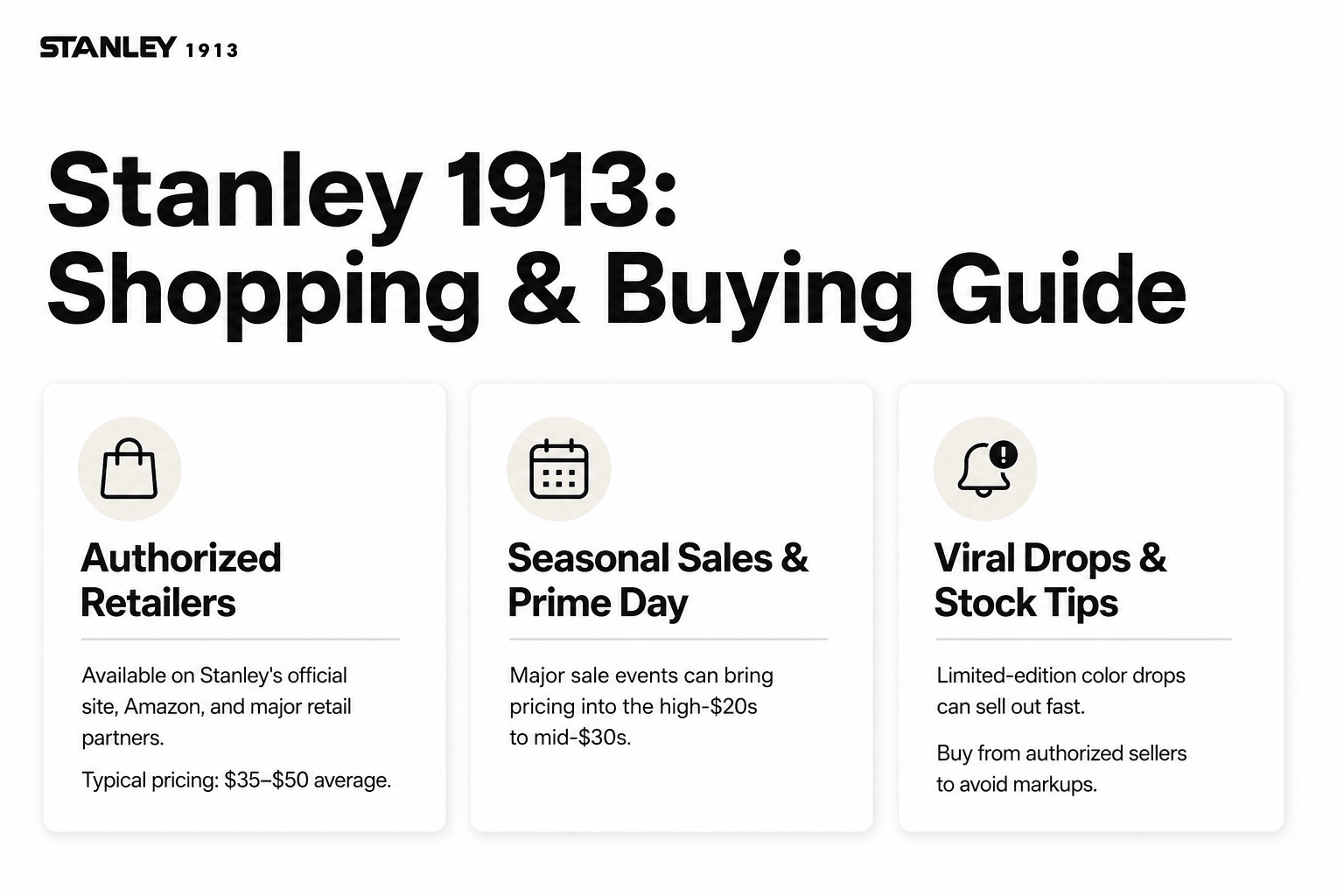
Stanley products sell through the brand's own site, major retailers, and Amazon, with prices varying meaningfully depending on where you buy. Amazon frequently discounts tumblers into the high-$20s to mid-$30s range during Prime Day and Black Friday, genuinely the best time to buy if you're not chasing a specific limited-edition colorway.
Stock is a real, persistent issue though. Popular colors and seasonal collaborations sell out fast, sometimes within hours, and resale markups on the most in-demand releases can run well above retail. Returns through the official site follow a standard policy for unworn, unused items, though a tumbler that's been used even once typically can't be returned once it's left the box.
Start Building Your Collection
Stanley 1913 Pros and Cons
| Pros | Cons |
|---|---|
| Strong insulation performance, cold for 11+ hours | Not the most leak-proof option, YETI beats it here |
| Recycled stainless steel construction, dishwasher safe | Heavier than several lighter competitors like Owala |
| Wide color and size variety across multiple lines | Popular colors sell out fast, driving resale markups |
| Lifetime warranty backing the "Built For Life" promise | Straw lids show wear faster than the tumbler body |
| Fits most car cup holders, genuinely practical design | Prices vary a lot depending on where you buy |
Frequently Asked Questions
Is the Stanley Quencher actually worth the price?
Yes, for insulation performance and everyday practicality it holds up well. It's not the most leak-proof or lightest option on the market, so weigh that against your priorities.
How long does the Stanley Quencher keep drinks cold?
Roughly 11 hours for cold drinks and up to 48 hours for iced drinks in real-world testing, competitive numbers within the insulated tumbler category.
Is Stanley better than YETI?
YETI generally wins on leak resistance and overall ruggedness, while Stanley wins on style, variety, color options, and a slightly lower average price.
Why are Stanley tumblers so hard to find in stock?
Viral demand combined with limited-edition color drops creates persistent shortages, especially for the most popular Quencher colorways.
Can you put a Stanley tumbler in the dishwasher?
Yes, most Quencher and IceFlow products are dishwasher safe, which is a genuine convenience compared to hand-wash-only competitors.
Final Verdict
Stanley 1913 earns its viral moment on more than just marketing, the insulation performance is genuinely strong, the recycled steel construction backs up the sustainability claims, and over a century of drinkware manufacturing shows up in the build quality. The hype isn't hollow.
It's also not flawless, YETI still wins on leak resistance, and lighter competitors like Owala exist for anyone prioritizing portability over style. If you want a tumbler that keeps drinks cold all day, comes in a color you'll actually be excited to use, and don't mind occasionally chasing down a specific colorway, Stanley remains one of the strongest picks in the category.