

- Plan Structure: One accident and illness plan, no confusing tiers
- Reimbursement: 90% in most states
- Payout Limits: None, annual or lifetime
- Deductible: Per condition, for life, not per year
- Direct Pay: Your vet can be paid at checkout at participating clinics
- Operating Since: 2000
Most pet insurance is sold on price. Trupanion is sold on two structural differences, and if neither matters to you, you will find it expensive.
The first is the deductible, which works per condition rather than per year. The second is that it can pay your vet directly at the counter. Both are worth understanding properly before you compare quotes.
The Deductible, With Real Numbers
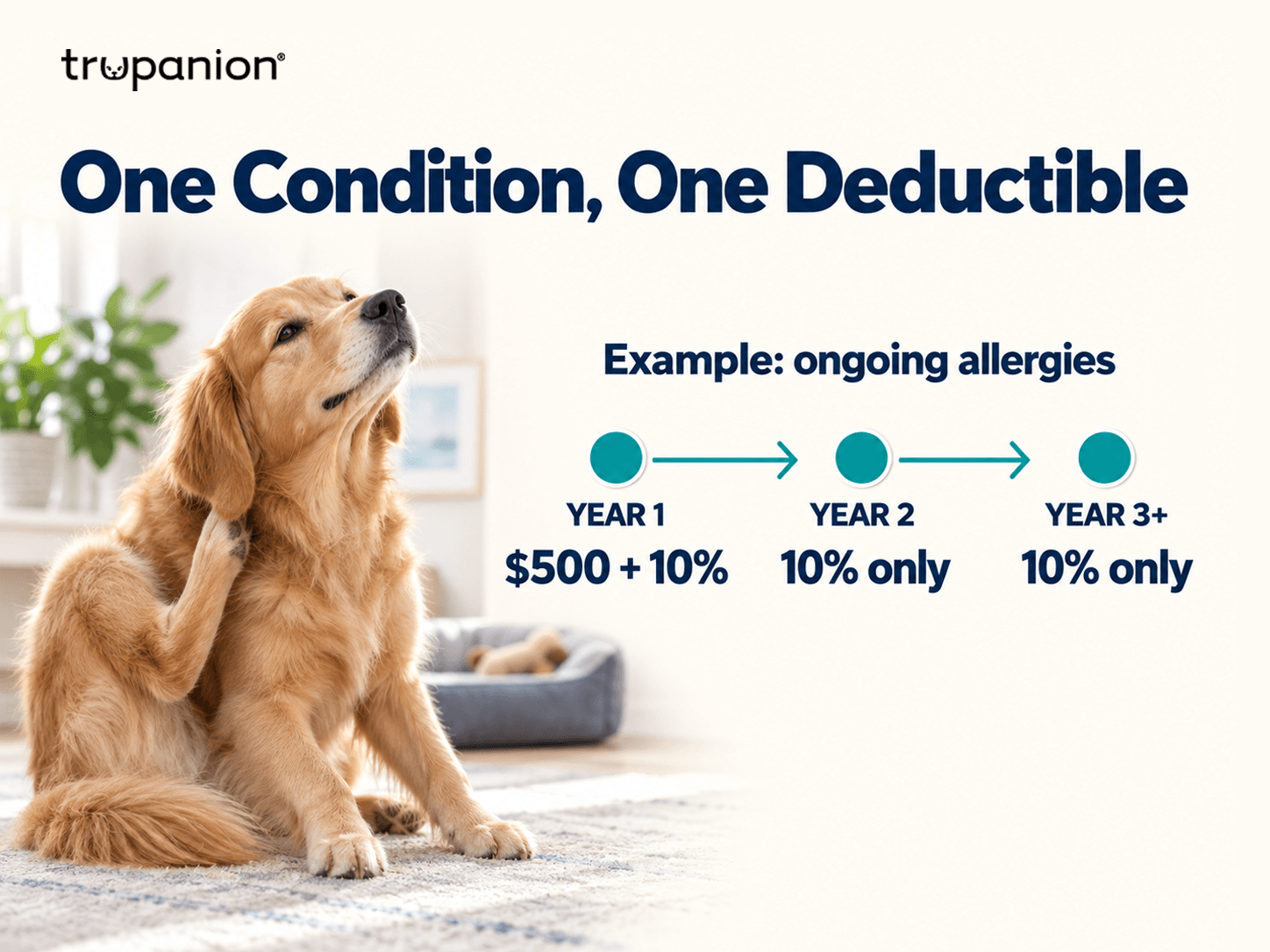
Most insurers reset your deductible every January. Trupanion sets one deductible per condition, and once you have paid it for that condition, it never applies again for that condition.
Say your dog develops allergies at age three. You pick a $500 deductible.
| Year | Allergy Costs | What You Pay |
|---|---|---|
| Year 1 | $2,000 | $500 deductible, plus 10% of the rest |
| Year 2 | $2,000 | 10% only |
| Year 3 | $2,000 | 10% only |
| Year 4 onward | Ongoing | 10% only |
With an annual deductible, you would pay that $500 again every single year. For a chronic condition running a decade, the difference is thousands.
The flip side is fair to state. If your pet has one unrelated problem a year, each new condition brings a fresh deductible, so the structure helps you less. This plan is built for long conditions, not scattered small ones.
Vet Direct Pay: What It Changes
At participating hospitals, Trupanion can pay the vet directly within minutes of the claim going in. You settle your deductible and your 10% at checkout and walk out.
Picture a $5,000 emergency surgery. Without direct pay, you put $5,000 on a card and wait for reimbursement. With it, you pay your share and go home. The company says it works with thousands of clinics across North America, and you can check whether yours takes it before you enroll.

If your vet does not participate, you submit invoices the usual way, and reimbursement can arrive by direct deposit.
What Is Covered and What Is Not in Trupanion
| Covered | Not Covered |
|---|---|
| Accidents and injuries | Pre-existing conditions |
| Illnesses, including chronic ones | Routine wellness and vaccines |
| Hereditary and congenital conditions | Spay and neuter |
| Diagnostics, surgery, hospital stays | Exam fees, in the base plan |
| Medications and prescription supplements | Anything before the waiting period ends |
| Prosthetics and rehabilitation | Grooming and boarding |
Two gaps trip people up. Exam fees are not covered in the base plan, which some competitors include. And wellness care is not part of the product at all, so annual checkups and shots stay out of pocket.
Enrollment Rules Worth Knowing
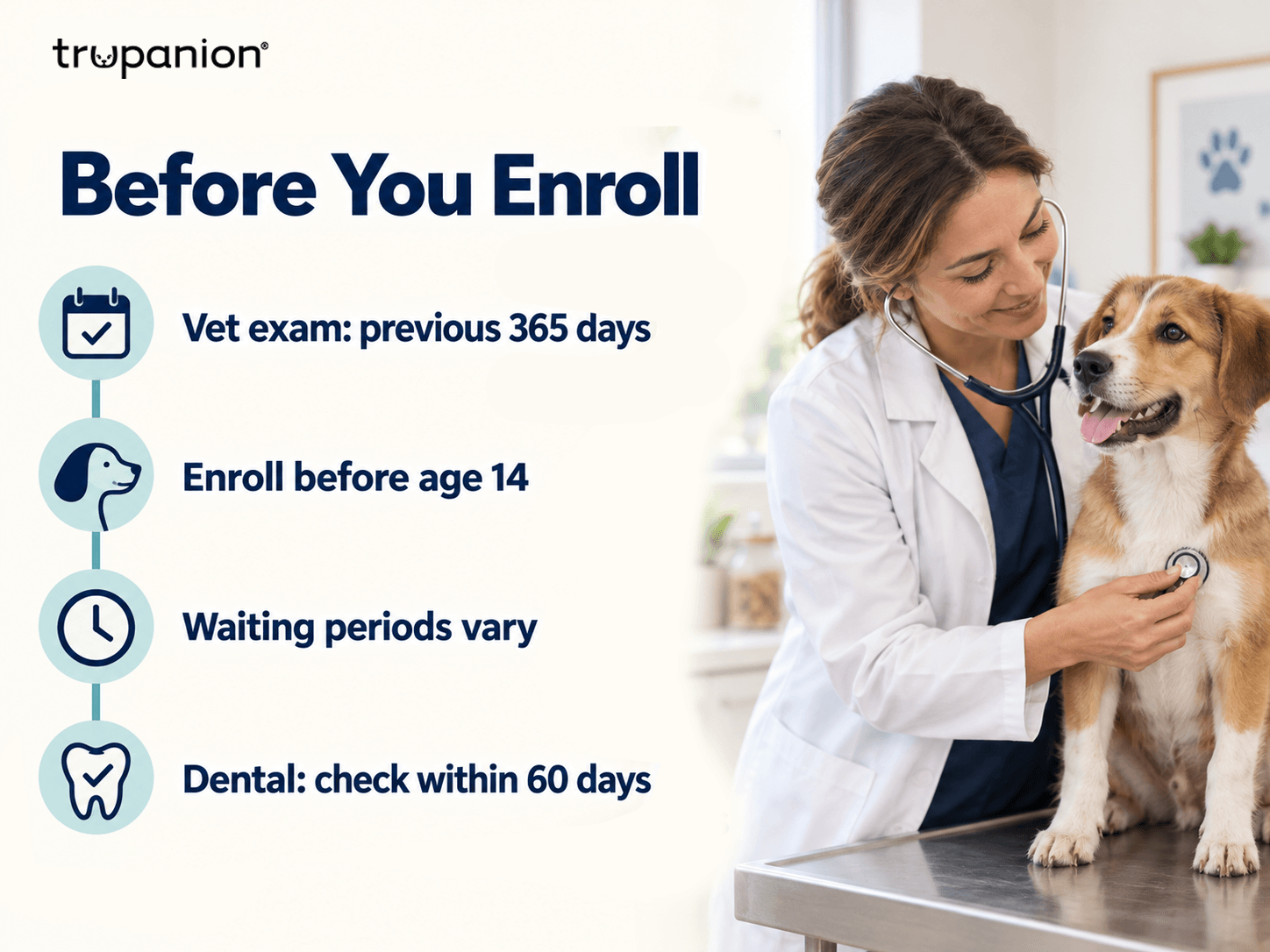
- Your pet must have had a full vet exam within the 365 days before you buy
- There is no minimum age, and you can enroll any pet before its 14th birthday
- Waiting periods vary by state, with illness waits commonly around 30 days
- Dental coverage requires a teeth check within 60 days of the policy start and annual exams after
- Traditional claims must be submitted within 90 days of treatment
- Cancel inside the first 30 days with no claims filed for a full refund
That first rule is the one people miss. No recent exam can mean a cancelled policy, so book the checkup before you buy, not after.
The Price Question
Trupanion runs more expensive than average. Independent reviewers put premiums above the national averages for both dogs and cats, and there is no multi-pet discount, which the company defends by arguing those discounts are funded by charging single-pet owners more.
Discounts do exist in specific cases: qualified service and therapy animals, a referral credit, and partnerships covering veterans' approved service dogs. Reimbursement is fixed at 90% in most states, so you cannot lower your premium by choosing 70% coverage the way you can elsewhere. You adjust the cost through the deductible instead.
Picking a Deductible
The deductible is the one lever you control, and it works differently here because you only pay it once per condition.
- $0 to $200: highest premium, but almost nothing out of pocket when something goes wrong. Suits owners who want predictability above all.
- $300 to $700: the middle ground most owners land on. Premiums drop noticeably and the one-time payment per condition stays manageable.
- $800 and up: lowest premium. Sensible if you keep an emergency fund and want cover mainly for the big events.
Because the deductible is not annual, a higher figure stings less over time than it would with a standard policy. You pay it once for each condition, then the 90% coverage takes over for good. Run two or three quotes at different deductibles before you decide, since the premium gap between them can be larger than people expect.
Who Should Choose Trupanion
Strong fit: breeds with known expensive risks, like French Bulldogs, Golden Retrievers, and Labradors. Owners of pets are already showing signs of a chronic condition that is not yet diagnosed. Anyone who could not comfortably front a five-figure vet bill and wait weeks for a refund.
Poor fit: budget-first shoppers, multi-pet households hunting a discount, owners wanting accident-only cover, and anyone whose pet has documented prior conditions, which no insurer covers.
Frequently Asked Questions
How much does Trupanion reimburse?
90% of eligible costs in most states, after the deductible for that condition is met.
Is the deductible annual?
No. It is per condition and applies once for the life of the policy for that condition.
Are there payout limits?
No annual, per-incident, or lifetime caps.
Does it cover exam fees?
Not in the base plan, which is a real difference from some competitors.
Do I need a recent vet exam to enroll?
Yes. A full physical within the previous 365 days is required.
The Final Verdict
Trupanion is not the cheap pick, and it does not pretend to be. What it sells is certainty: no payout ceiling, a flat 90%, one deductible per condition for life, and the option of your vet being paid before you leave the building.
For a young pet of a breed with known chronic risks, that structure can be worth far more than the premium gap. For a healthy mixed breed and a tight budget, a cheaper annual-deductible policy may serve you better. Get quotes both ways, look at the ten-year cost rather than the monthly figure, and book the vet exam before you enroll.
One last practical note. Insurance terms vary by state and by the policy you are issued, so read your own documents rather than a summary like this one before you rely on any detail.