
Why Is Everyone Talking About TruthFinder?
Somebody gets a call from a number they don't recognize. Or matches with someone on a dating app who seems a little too polished. That's usually where this starts. Not some deliberate software search. A Reddit thread mentions TruthFinder. Or there's another one of those ads mid-YouTube video, again. Name just sticks after enough times seeing it.
This review covers what TruthFinder actually does. What it doesn't, too. And whether the hype actually matches the reality. Not a sales pitch. Just a straight look at it.
Check TruthFinder's Latest Plans
What Is TruthFinder and How Does It Work?
What Is TruthFinder?
It's a people search service, web-based, built around pulling together publicly available records into one report. Type in a name or a number, get back whatever's out there.
Where Does TruthFinder Get Its Information?
Public records mostly. County databases, state records, court filings, that sort of thing. Not some secret database, just information that's technically already public but scattered across a dozen different government sites nobody wants to dig through manually.
What Can You Search For?
Names, phone numbers, email addresses, sometimes just an address. The report that comes back depends heavily on what's actually available for that person.
Why Do People Use TruthFinder?
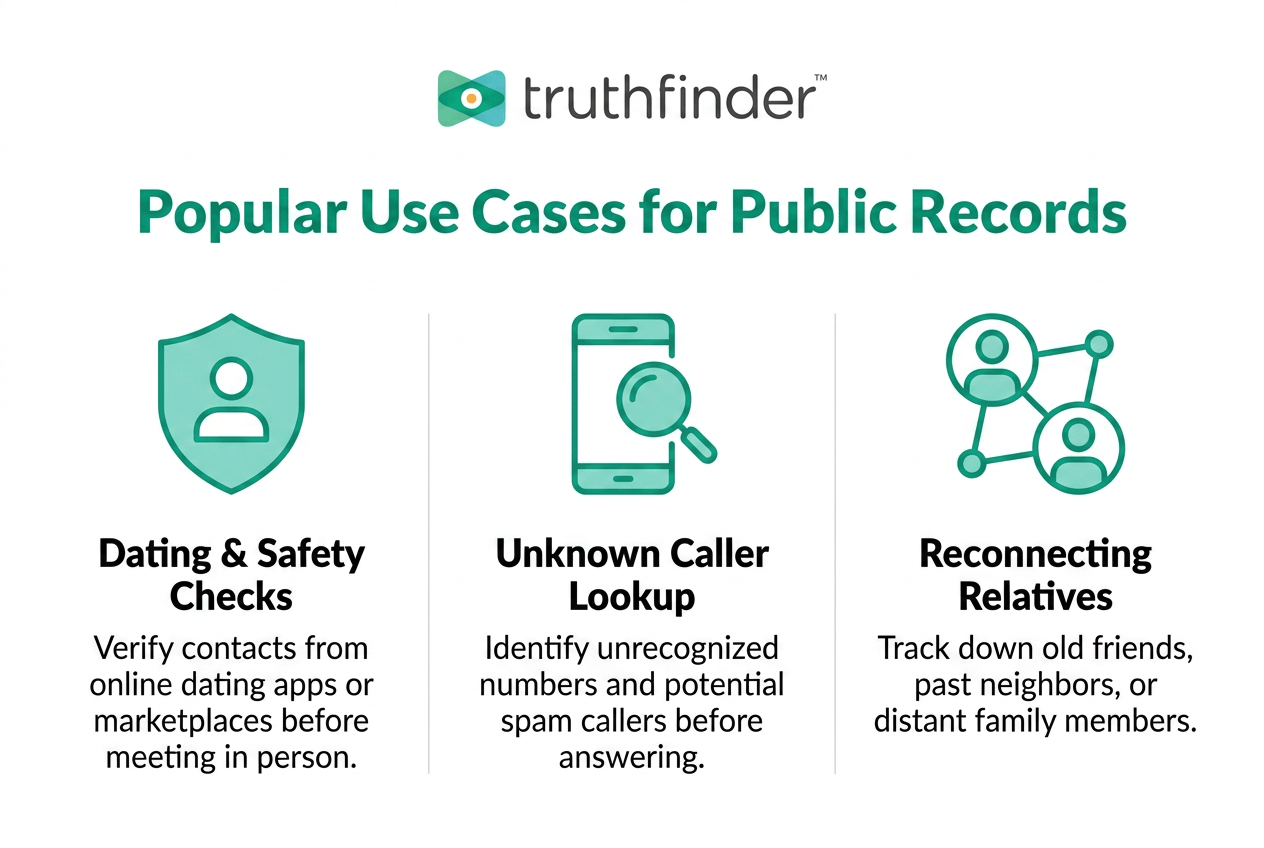
Looking Up Unknown Callers
Somebody's phone rings. Number's unfamiliar. Instead of just letting it go to voicemail like people used to, a lot of folks pull up TruthFinder first, just to see who's calling.
Researching Someone Before Meeting in Person
Online dating, meeting someone from a marketplace app, whatever it is, a quick check before meeting face to face has become fairly normal now.
Reconnecting With Friends or Family
Lost touch with someone years ago? Address history and relative listings sometimes help track down where they ended up.
Verifying Public Information
Confirming an address, checking if someone's who they say they are, that kind of basic verification work too.
What Can TruthFinder Actually Reveal?
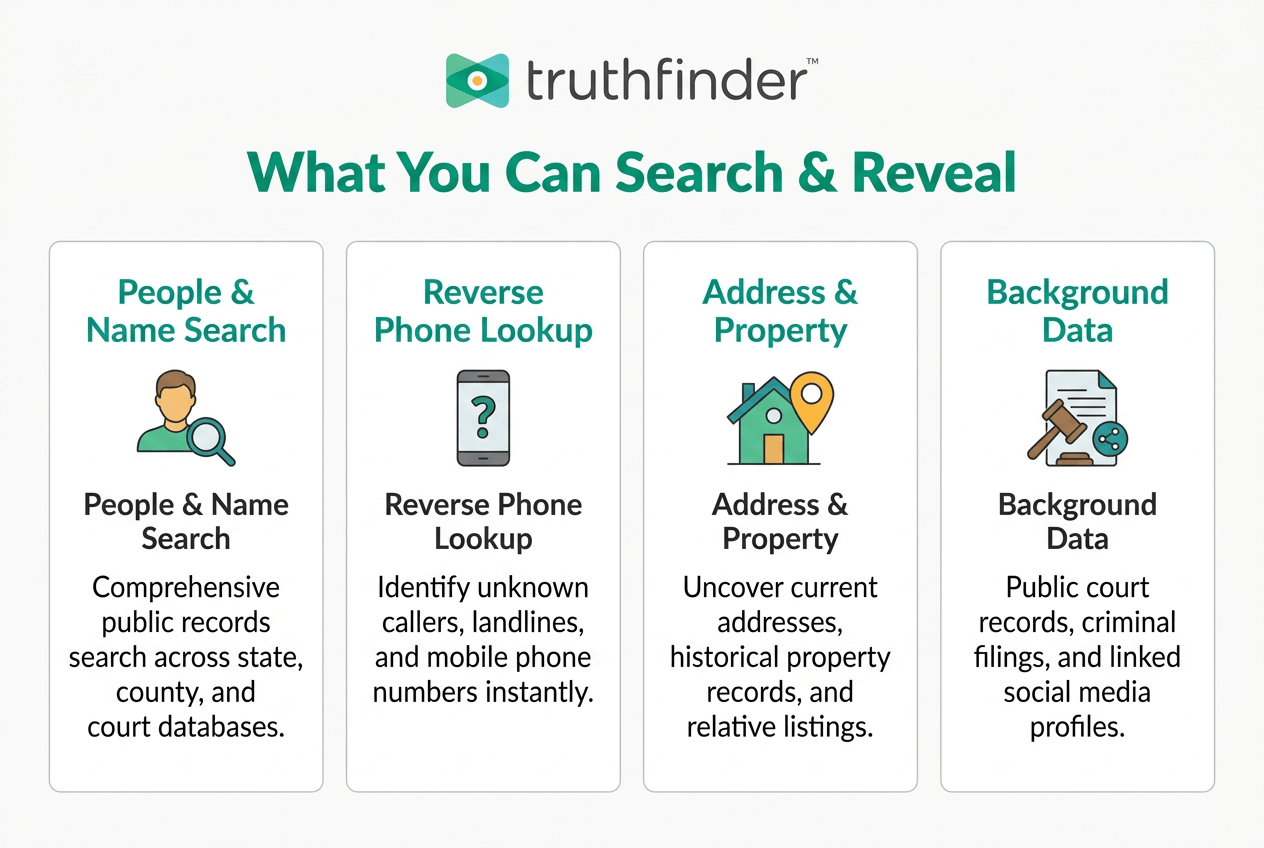
People tend to expect background check tools to reveal everything, like some all-knowing database. Public record search platforms don't really work that way, and it's worth being honest about that upfront.
Information You May Find
Contact details, address history, court records, criminal records where they exist publicly, social profiles, relatives, property records. When the data's out there, TruthFinder tends to surface a good chunk of it.
Information You Probably Won't Find
Sealed records. Anything not part of the public record to begin with. Private messages, private financial details, none of that shows up here, and it shouldn't, honestly.
Why Search Results Can Vary Between People
Some people generate huge, detailed reports. Others come back nearly empty. Depends entirely on how much public data actually exists tied to that name, which varies wildly from person to person.
Why TruthFinder Became One of the Most Recognized People Search Services
Popularity here isn't purely about the product. A few other things are doing a lot of the work.
Heavy Online Advertising
It's genuinely everywhere, YouTube pre-rolls, podcast ad reads, social media. That kind of repeated exposure builds recognition fast, whether or not someone's ever actually used the service.
Growing Interest in Personal Safety
More people are checking unfamiliar contacts before engaging with them, especially around dating and online marketplaces. That trend alone drives a lot of traffic toward services like this.
Curiosity Around Public Records
People are just curious. About old friends, about themselves even, about what's technically out there with their name on it.
Word-of-Mouth and Online Reviews
Reddit threads, YouTube reviews, forum recommendations. A lot of the traffic comes from people talking about it after the fact, not from the ads alone.
See What Information TruthFinder Can Search
Things You Should Know Before Using TruthFinder
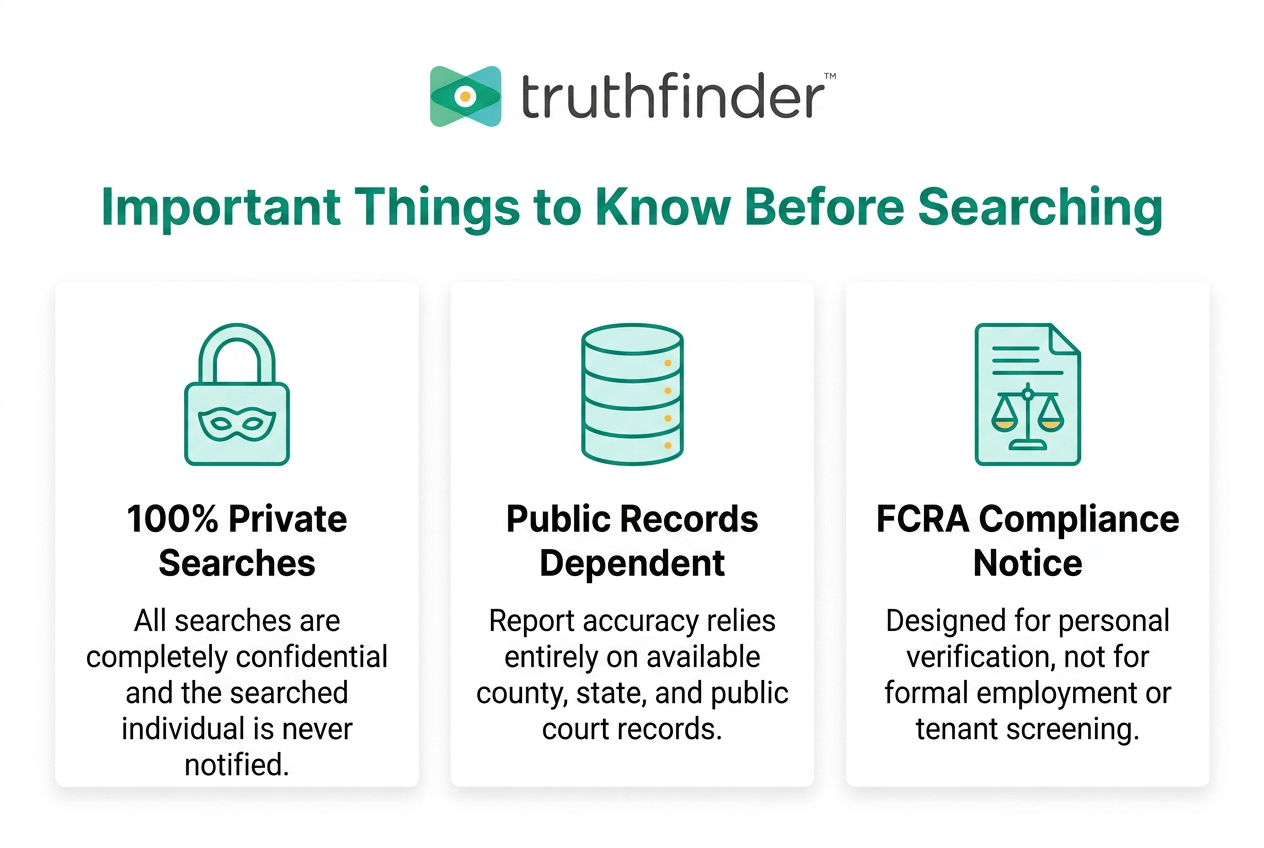
Before subscribing, it helps to understand the cost, the limitations, and what this service actually is versus what it sometimes gets assumed to be.
Subscription-Based Access
TruthFinder runs on recurring monthly plans, not single-report purchases. Pricing varies by plan type, phone lookup sits at the cheaper end, full people search reports run closer to the higher end, and most plans auto-renew until canceled.
Public Records Aren't Always Complete
Records get updated at different speeds depending on the jurisdiction. Some counties digitize everything quickly. Others lag years behind. That inconsistency shows up in report quality.
It Isn't a Consumer Reporting Agency
This matters more than people realize. TruthFinder isn't built for employment screening, tenant screening, or credit decisions, and using it that way isn't really what it's designed for.
Privacy and Opt-Out Options
People who want their own information removed generally can request that through an opt-out process. Worth knowing this works both directions, someone can look you up too.
Frequently Asked Questions
Is TruthFinder a legitimate people search service?
It's real. Operating, pulling actual public records, not some scam operation running off with people's card numbers.
What kind of information can TruthFinder find?
Contact info, address history, court and criminal records where public, relatives, social profiles. Depends on what exists for that person.
Does TruthFinder notify someone when you search for them?
Nope. Searches stay private, the person on the other end never gets a heads up.
Is TruthFinder worth paying for?
For a one-off curiosity check, probably not, the subscription's overkill. Somebody running verification searches regularly though, that's where it starts paying for itself.
Can you remove your information from TruthFinder?
Yes, there's an opt-out process available for anyone who wants their own listing taken down.
Should You Try TruthFinder?
Curious daters, people getting weird calls, anyone doing a basic gut-check before meeting someone new, TruthFinder tends to fit that use case well. It's a real service pulling real public data, not the mysterious all-seeing tool the ads sometimes make it sound like.
Anyone expecting a complete, guaranteed profile on every single search should temper expectations a bit. Public records are inconsistent by nature, and TruthFinder can only surface what actually exists. For the right use case though, casual curiosity backed by actual data, it does the job reasonably well.