
Every year, thousands of new gadgets enter the market. Most receive little attention. A few achieve moderate success. Then there are the rare products that seem to appear everywhere at once.
One week nobody has heard of them.
The next week they're dominating TikTok, Instagram, YouTube, Reddit, and Amazon best-seller lists.
Products like the Stanley Quencher, Owala FreeSip, Bird Buddy, Rabbit R1, and countless others have demonstrated how quickly consumer attention can spread online.
But what actually causes a gadget to go viral?
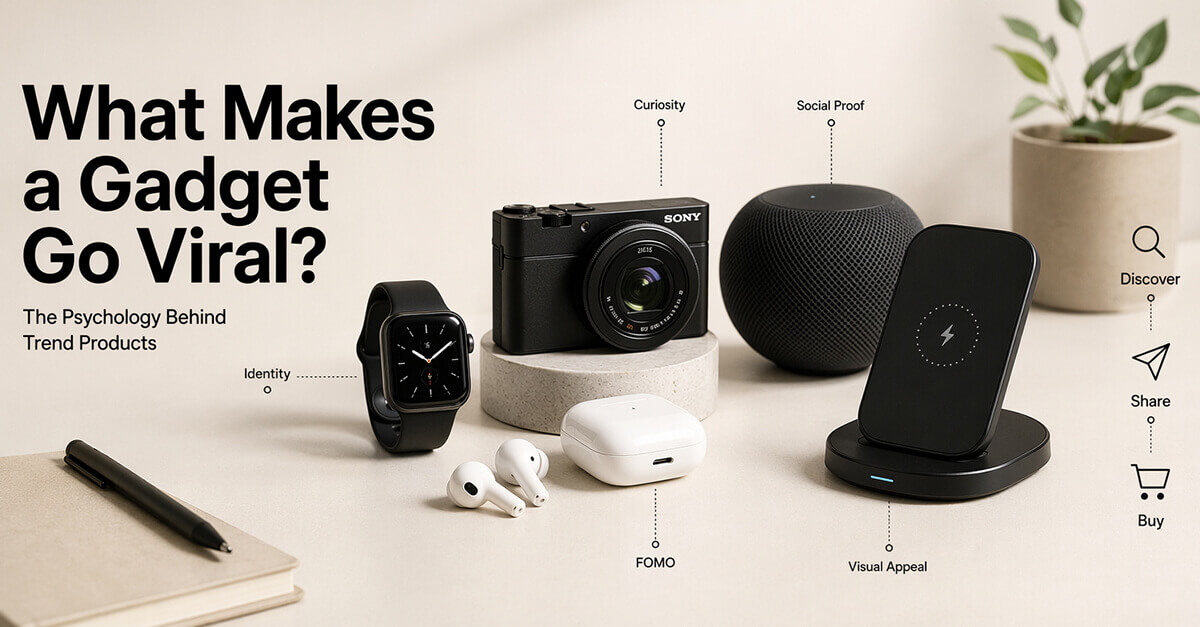
The answer has less to do with technology and more to do with psychology. Successful viral products tap into fundamental human behaviors that influence how people discover, discuss, and purchase products.
Let's explore the psychology behind trend products and why some gadgets capture attention while others disappear.
People Love Discovering Something New
Humans are naturally curious.
When people encounter a product they've never seen before, their brains immediately begin asking questions.
- What is it?
- How does it work?
- Why is everyone talking about it?
Novelty attracts attention.
This is one reason unusual gadgets often perform so well on social media. Whether it's an AI-powered device, a smart bird feeder, or a unique productivity tool, new ideas naturally encourage engagement.
The more unexpected a product appears, the more likely people are to stop scrolling and investigate.
Curiosity is often the first step toward virality.
Products That Solve Small Frustrations Spread Quickly
Many viral products don't solve major problems.
Instead, they solve small annoyances that millions of people experience every day.
Examples include:
- Water bottles that are easier to use.
- Robot vacuums that reduce cleaning effort.
- Smart lighting that simplifies room customization.
- Portable devices that improve productivity.
When people see a product solving a problem they've personally experienced, the value becomes immediately obvious.
This creates what psychologists sometimes call a "recognition moment."
The viewer thinks:
"I've dealt with that problem before."
That emotional connection increases interest and purchasing intent.
Visual Demonstrations Trigger Strong Reactions
Some products are easier to understand than others.
The best viral gadgets often require almost no explanation.
A viewer can instantly see:
- What does the product do?
- Why does it matter?
- How does it improve daily life?
This is especially important on platforms like TikTok and Instagram, where creators have only a few seconds to capture attention.
Products that create visual transformations tend to perform particularly well.
Examples include:
- Smart lighting systems
- Cleaning gadgets
- Organization tools
- Car electronics
- Home automation products
The clearer the demonstration, the faster the product spreads.
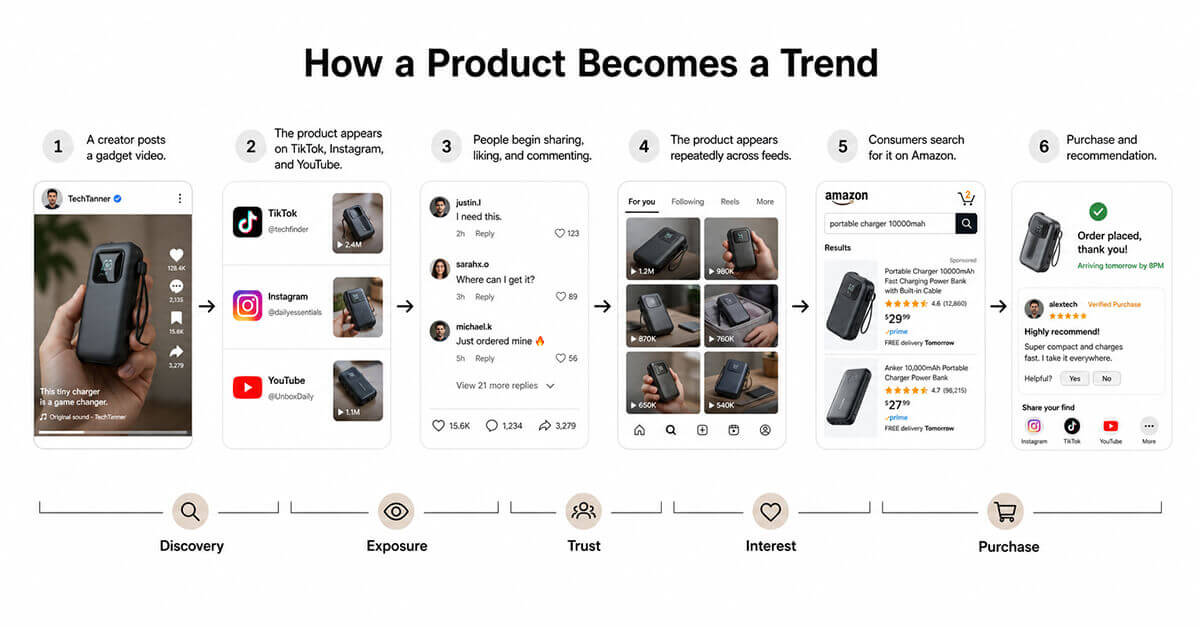
Social Proof Influences Buying Decisions
Humans are heavily influenced by the behavior of others.
When people repeatedly encounter the same product across different platforms, they begin to view it differently.
The internal conversation often sounds like:
- Everyone seems to have this.
- It keeps appearing in my feed.
- Maybe it's actually worth trying.
This phenomenon is known as social proof.
The perception that many other people have already validated a product reduces uncertainty.
The more frequently consumers see a gadget recommended, reviewed, or demonstrated, the more credible it begins to appear.
FOMO Drives Action
Fear of Missing Out, commonly known as FOMO, remains one of the strongest forces in consumer psychology.
When products gain momentum, consumers often worry that they may miss an opportunity to experience something useful, exciting, or beneficial.
This feeling becomes stronger when:
- Products sell out.
- Limited editions appear.
- Creators constantly discuss the product.
- Social conversations continue growing.
FOMO accelerates purchasing decisions because people prefer acting now rather than risking regret later.
Many viral products benefit significantly from this psychological effect.
Identity Plays a Bigger Role Than People Realize
Consumers don't simply buy products.
They buy what products represent.
For example:
- Smart gadgets can signal innovation.
- Productivity tools can signal efficiency.
- Fitness products can signal self-improvement.
- Smart-home devices can signal modern living.
Owning certain products becomes part of how people express themselves.
This is one reason products like smart watches, premium water bottles, and AI gadgets generate so much attention.
The product becomes part of a lifestyle narrative.
The Best Viral Gadgets Feel Instantly Useful
Many products fail because they require too much explanation.
The most successful viral gadgets communicate their value almost immediately.
Users should be able to understand:
- What problem does it solve?
- Why does it matter?
- How does it fit into daily life?
This simplicity dramatically increases shareability.
People are far more likely to recommend products that can be explained in a single sentence.
Amazon Accelerates the Viral Cycle
Social media creates awareness.
Amazon converts that awareness into sales.
Once curiosity develops, consumers often head directly to Amazon to:
- Read reviews
- Compare options
- Check pricing
- Make purchases
The friction between discovery and buying has become incredibly small.
This is why products can move from obscurity to bestseller status so quickly.
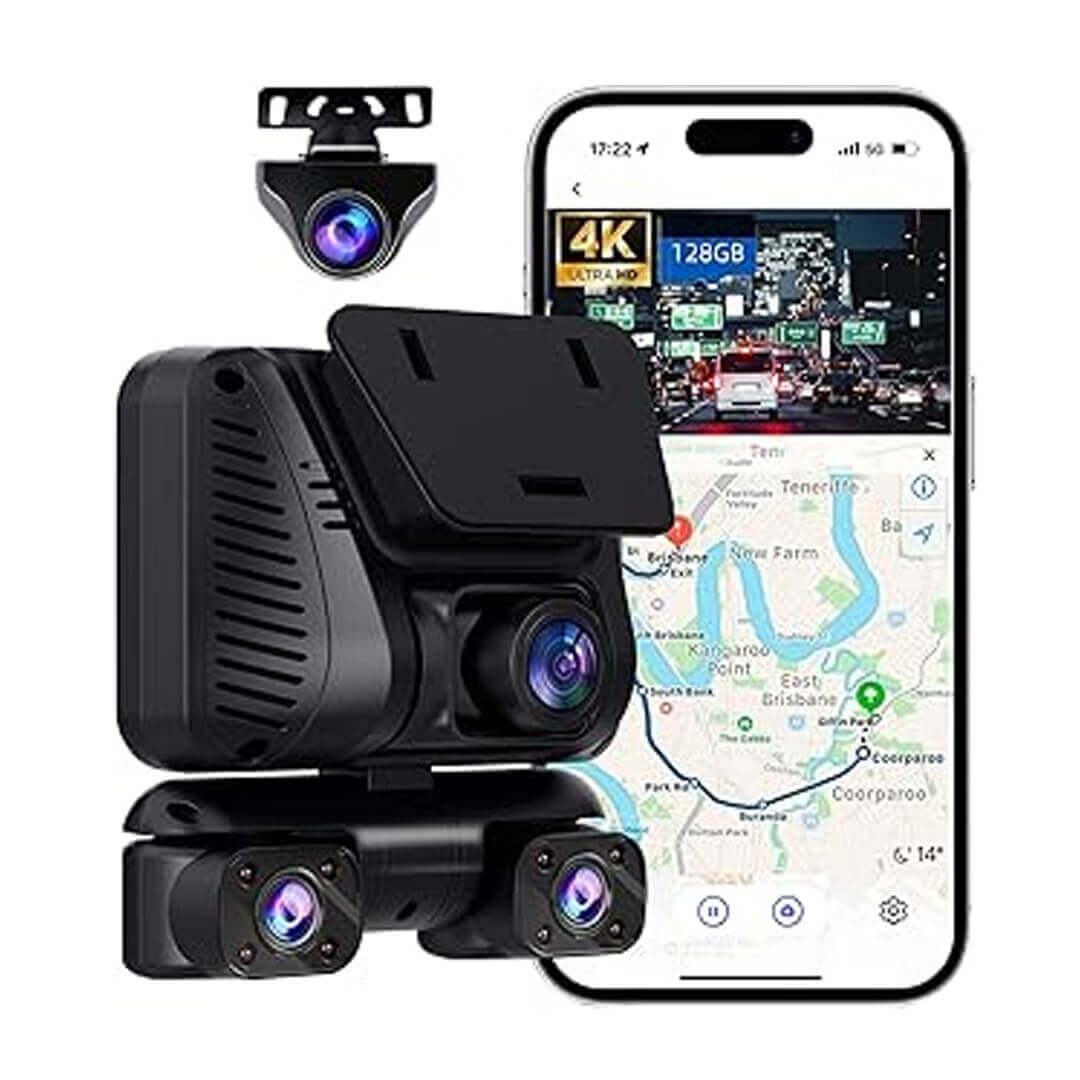
Categories such as car electronics frequently benefit from this behavior because consumers can immediately see practical value.
Products like dash cams, wireless adapters, smart chargers, and vehicle accessories often spread rapidly through social media demonstrations.
Amazon Category: Car & Vehicle Electronics
Explore Trending Products:
https://www.amazon.com/s?i=specialty-aps&bbn=16225009011&rh=n%3A%252116225009011%2Cn%3A3248684011&ref=nav_em__nav_desktop_sa_intl_car_and_vehicle_electronics_0_2_6_4
Why Some Viral Products Fail
Not every viral product succeeds long term.
Many products experience brief popularity before disappearing.
Common reasons include:
- The product doesn't solve a meaningful problem.
- Quality fails to meet expectations.
- Competitors offer better alternatives.
- The novelty wears off quickly.
The most successful viral gadgets combine strong first impressions with genuine everyday usefulness.
That's what separates lasting products from temporary trends.
Final Thoughts
Gadgets go viral because they tap into a powerful combination of curiosity, social proof, visual appeal, convenience, and emotional motivation.
While technology certainly matters, psychology often matters more.
The products that succeed are not always the most advanced. They are the products that people immediately understand, enjoy sharing, and feel excited to recommend.
As social media continues to shape consumer behavior, understanding the psychology behind viral products becomes increasingly important. The next big trend may not come from a billion-dollar marketing campaign.
It may simply come from a product that solves a common problem in a way people can't stop talking about.