
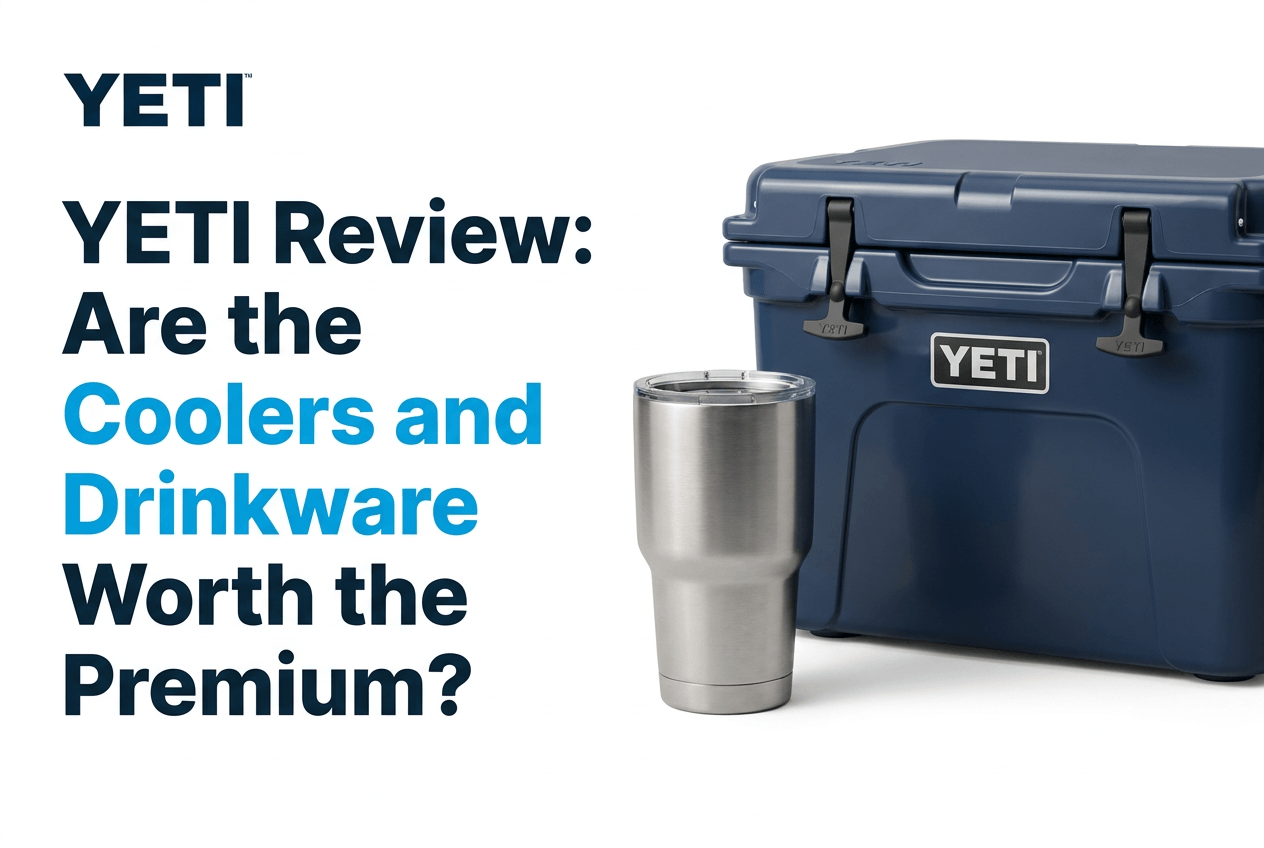
Somewhere along the way, a cooler brand became a status symbol. That's genuinely what happened with YETI, tailgates, truck beds, Instagram kitchen counters, the logo's everywhere now. Which makes the $300 price tag on a mid-size cooler feel less like sticker shock and more like, well, expected.
This review isn't really about whether YETI keeps ice cold, everyone already knows it does. It's about whether the whole buying experience, direct from yeti.com, actually makes sense, or whether you're just paying for a logo you could get cheaper somewhere else.
Browse YETI's Current Cooler and Drinkware Lineup
What YETI Sells
The Core Catalog
Hard coolers, the Tundra line, soft coolers under the Hopper name, drinkware, Ramblers mostly, bags, camp chairs, even dog bowls at this point. Drinkware's quietly become the real moneymaker here, plenty of YETI owners have never bought a single cooler, just a mug that lives on their desk.
YETI Custom and Exclusives
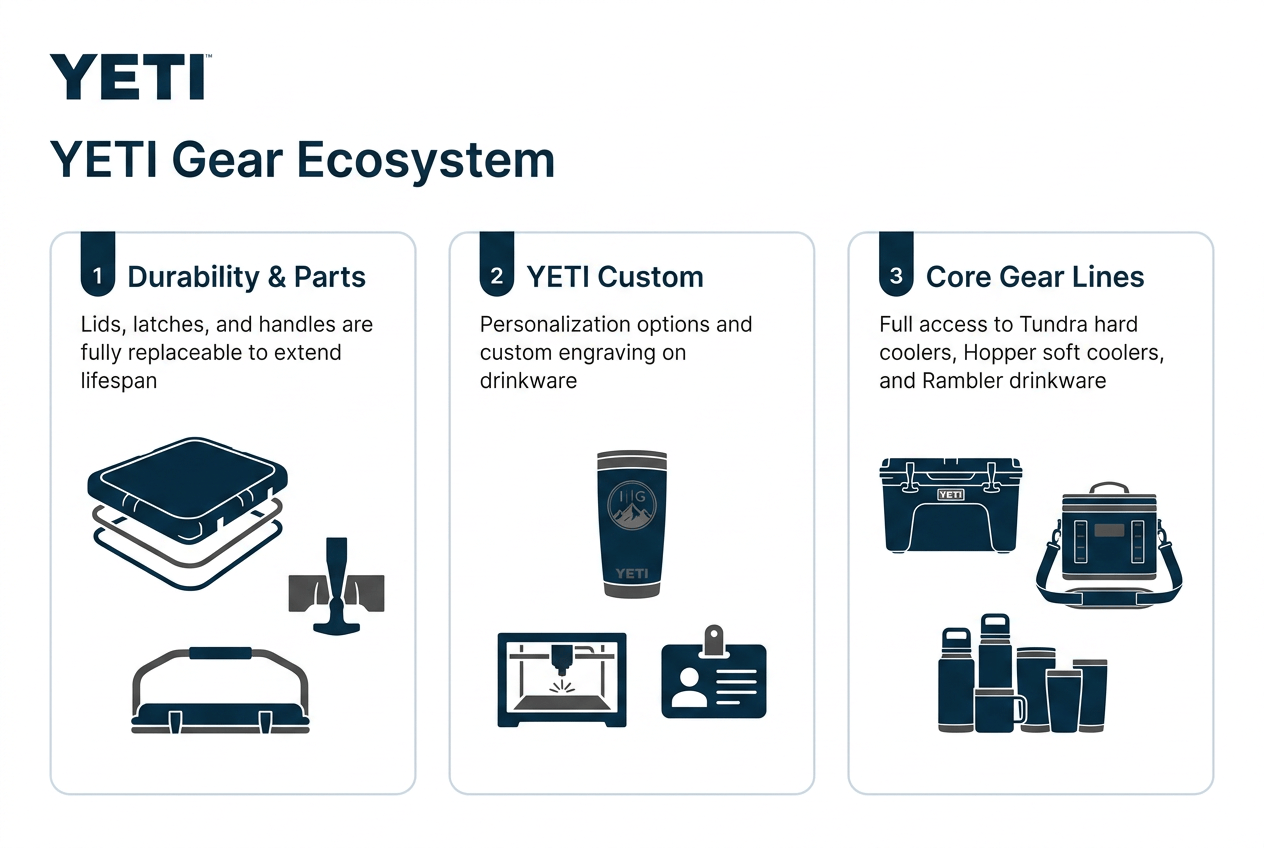
There's a personalization program, YETI Custom, engraving, colors, that kind of thing. Limited-edition drops rotate through too. And replacement parts, lids, latches, handles, actually exist here, which matters more than it sounds like. Most cheaper coolers just become landfill once one part breaks. YETI's ecosystem lets you keep using the same cooler for years.
YETI Pricing and What You Actually Pay
Cooler Pricing Reality
Hard coolers run $200 to well over $1,500 depending on size, the Tundra 35 up through the Tundra 650. Soft coolers land $200 to $400. That's steep, no way around saying it plainly.
| Category | Entry-Level Price | Flagship Price |
|---|---|---|
| Hard Coolers | ~$200 (Tundra 35) | $1,500+ (Tundra 650) |
| Soft Coolers | ~$200 | ~$400 |
| Drinkware | ~$25 | ~$65 |
| Bags | ~$150 | ~$400 |
| Camp Chairs | ~$300 | ~$300 |
Compare a Tundra 45 against an RTIC 45 or a Pelican 45 and the gap is real, RTIC especially runs noticeably cheaper for a cooler built pretty similarly. So yeah, part of what you're paying for here is the name. Not all of it, but some.
Drinkware and Accessories
Rambler bottles and tumblers sit $25 to $65, and honestly this is where a lot of people's YETI spending actually happens, one mug at a time rather than one big cooler purchase.
The YETI Elite Program
A loyalty program exists, points, early access to drops, that sort of structure. Free shipping kicks in at just $25, which is a low bar and genuinely convenient. What it doesn't do is get you a better price than REI or Amazon, because of MAP pricing, more on that below.
Warranty, Returns, and Support
Warranty Coverage by Product
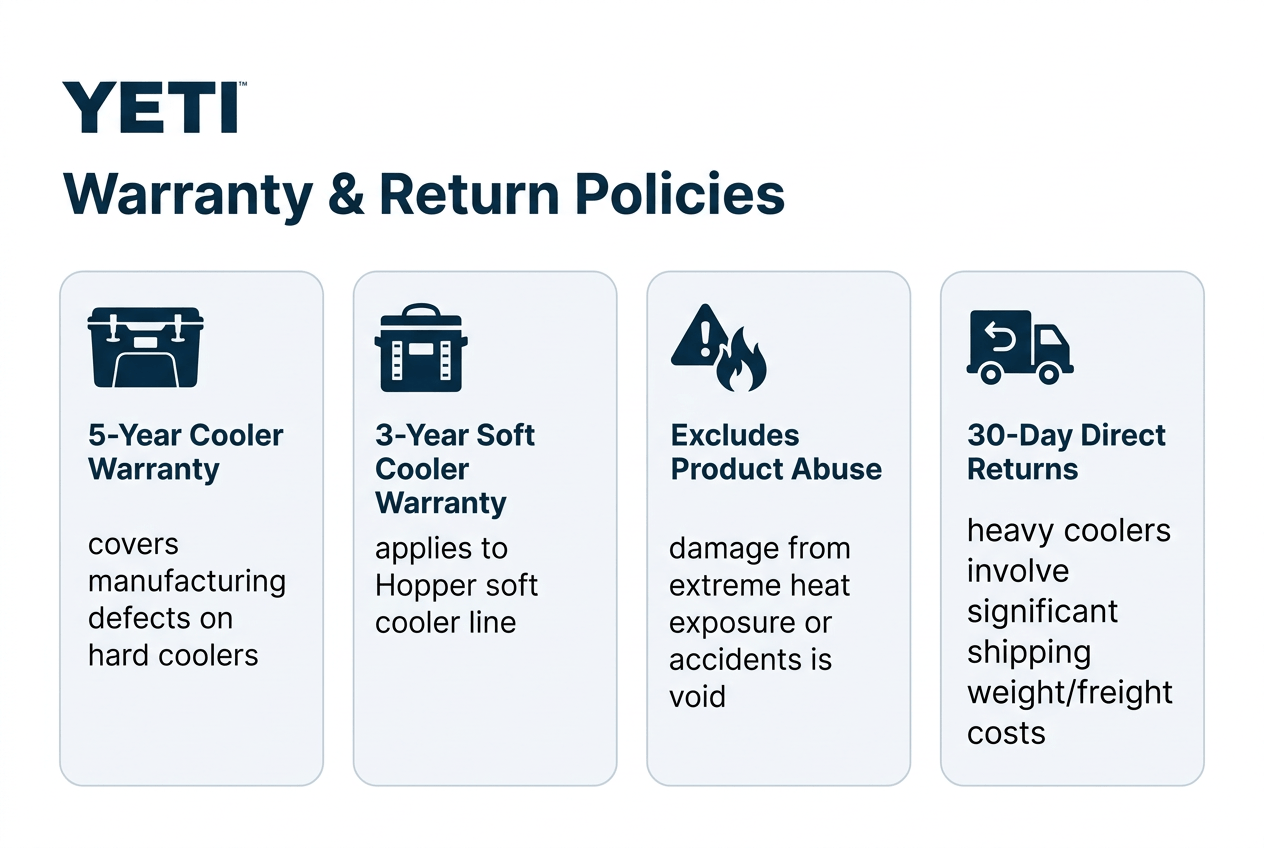
Five years on hard coolers, three on soft coolers, five on drinkware. Solid numbers on paper. Worth being precise here though, "limited" warranty means manufacturing defects, not you leaving it in direct sun for two summers or running it over with a truck. Abuse voids it, same as most brands.
Returns and Replacements
Standard 30-day return window on direct purchases. Replacement parts, MagSlider lids especially, are genuinely useful here, since they let you fix a leak or a broken latch instead of buying an entirely new unit.
YETI vs. the Competition
YETI vs. RTIC
RTIC's the closest clone in the game, similar rotomolded build, noticeably lower price. If budget's the deciding factor and you don't care about brand cachet, RTIC probably gets you 90% of the performance for meaningfully less money.
YETI vs. Pelican
Pelican sits in similar premium territory, and on some product lines actually offers a stronger warranty. It's less of a lifestyle brand though, more purely functional, if that distinction matters to you.
When Cheaper Brands Make Sense
Honestly? For a lot of casual use, day trips, backyard cookouts, an Igloo does the job fine. Multi-day ice retention in serious heat is where YETI and its premium competitors actually start earning their price.
| Brand | Price Range | Strength | Weakness |
|---|---|---|---|
| YETI | $$$–$$$$ | Brand ecosystem, parts, resale value | High price, heavy |
| RTIC | $$–$$$ | Lower cost, similar build | Less brand recognition |
| Pelican | $$$–$$$$ | Strong warranty on some lines | Less lifestyle appeal |
| Igloo | $–$$ | Budget-friendly | Shorter lifespan |
Buy YETI if the brand ecosystem and resale value matter to you. Buy RTIC if you want similar performance for less. Buy Igloo if you just need something for one afternoon.
Shopping at YETI.com vs. Retailers
Why Buy Direct
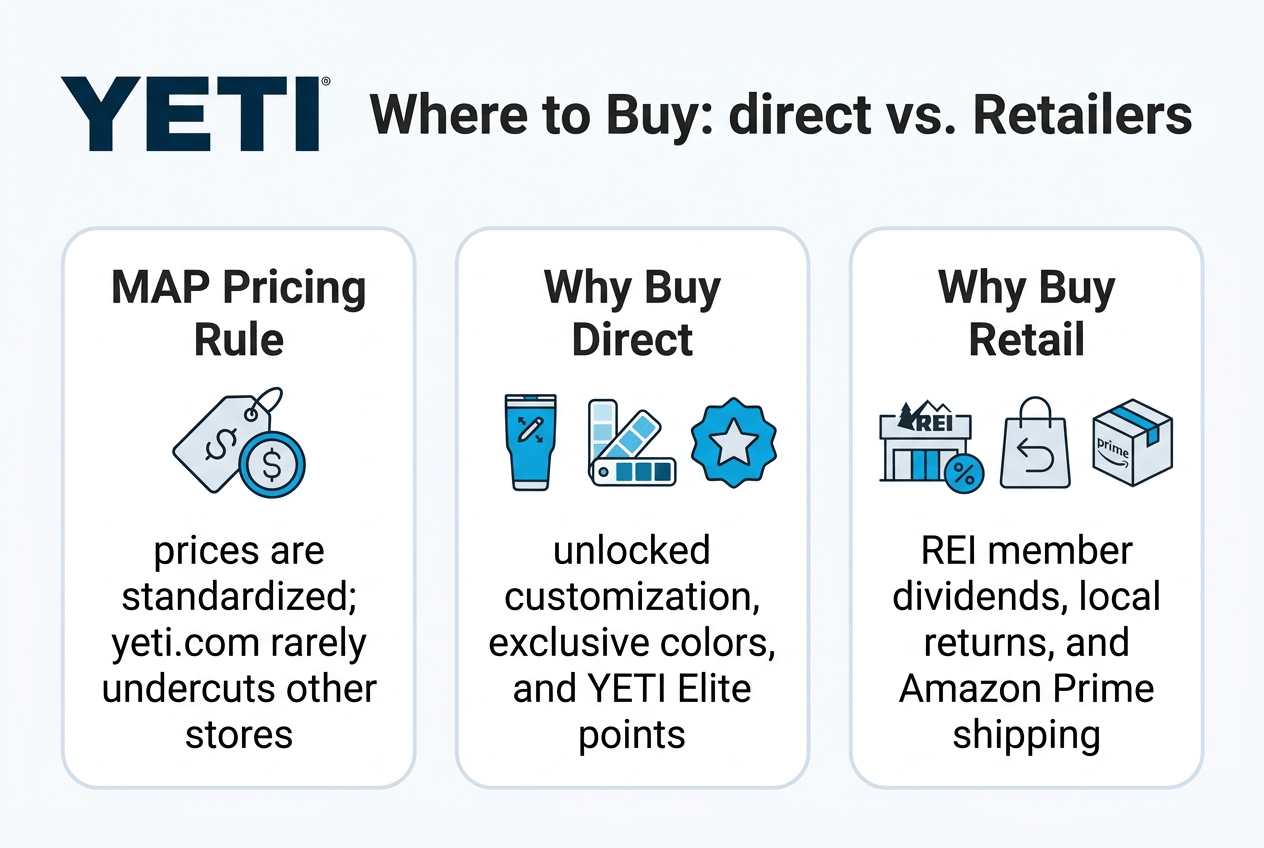
Full catalog access, customization options, YETI Elite points, and exclusive colorways you won't find at REI. That's really the whole pitch for buying direct.
Why Buy from REI or Amazon Instead
REI's got its member dividend, immediate in-store pickup, easier local returns. Amazon's got Prime shipping speed. And here's the thing that trips people up, MAP pricing means yeti.com almost never undercuts these retailers on price. So the case for buying direct rests entirely on customization and exclusives, not on saving money.
Customer Reputation and Durability Claims
Owners tend to be loyalists, genuinely, ice retention and build quality get praised constantly, and warranty claims reportedly get honored without much hassle. On the complaint side, weight comes up a lot, so does price obviously, and early Rambler MagSlider lids had some leakage issues that later design tweaks addressed.
Resale value holds up well on the secondary market too, which says something about durability perception even among people selling theirs. And yeah, somewhere in every YETI discussion someone points out a $50 Igloo works fine for a single day trip. Not wrong, necessarily. Just a different use case.
Who Should Buy from YETI
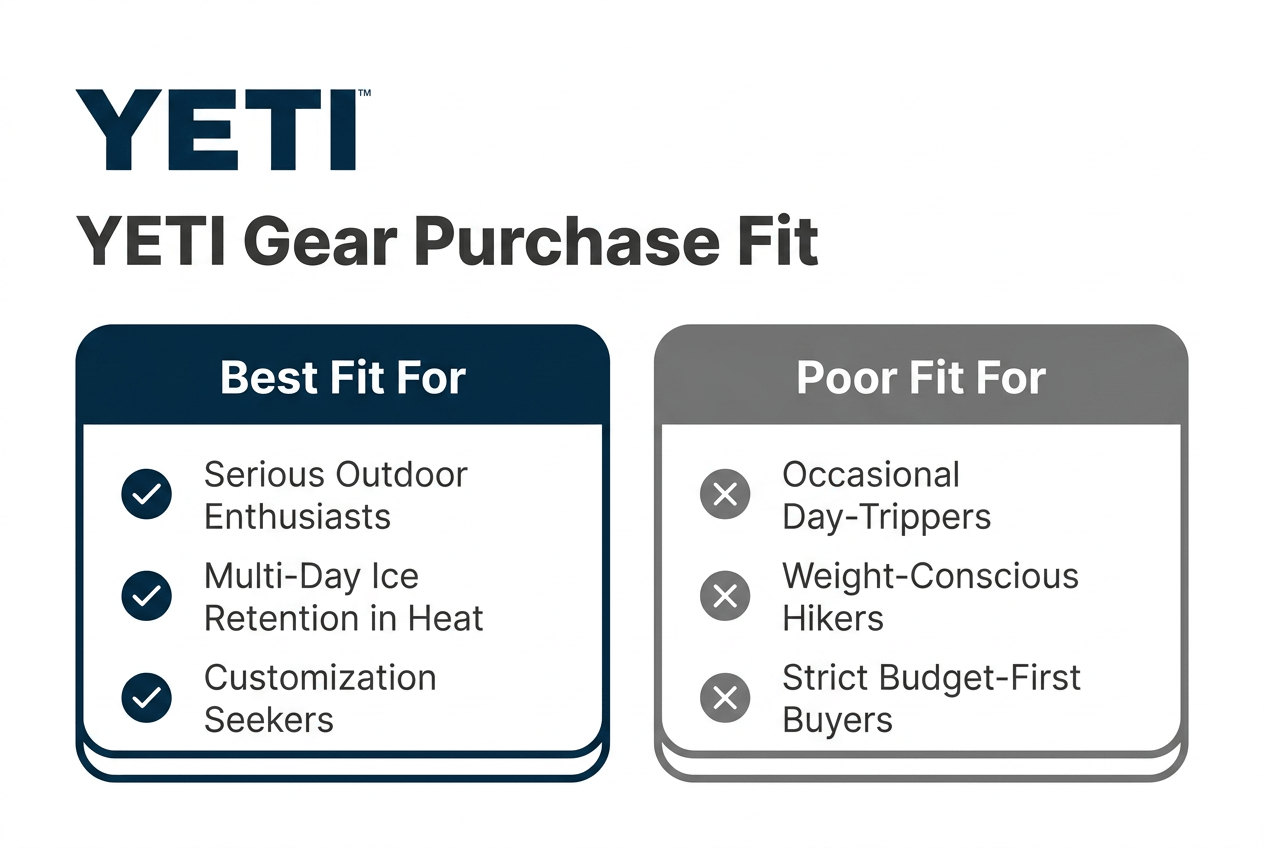
Frequent campers, hunters, tailgaters, anyone who actually needs multi-day ice retention in real heat. Customization seekers who want their name on a tumbler. Resale-conscious buyers who like that YETI gear hold value.
Poor fit: occasional picnickers who use a cooler twice a summer, weight-conscious hikers carrying gear any real distance, budget shoppers who don't need extreme durability. A day-tripper doesn't need a Tundra. A Rambler mug, though, might still be worth it for almost anyone.
Frequently Asked Questions
Is YETI drinkware dishwasher safe?
Most Rambler products are top-rack dishwasher safe, though hand-washing is recommended to preserve the finish and MagSlider lid function longer.
Does YETI ship internationally?
Shipping availability varies by country and product. Check yeti.com directly, since international options are more limited than domestic U.S. shipping.
Are YETI products made in the USA?
Some components are manufactured overseas, though YETI assembles and finishes many products domestically. Sourcing varies by product line and category.
Can I customize any YETI product, or only certain ones?
Customization is available on select drinkware, bags, and coolers through YETI Custom, not the entire catalog across every product category.
How long do YETI coolers actually keep ice?
Multi-day retention in moderate heat is realistic with proper packing, though exact duration depends on cooler size, ice ratio, and ambient temperature.
Final Verdict
YETI's durability claims mostly hold up, the warranty is real, the parts ecosystem genuinely extends product life. But the premium is real too, and MAP pricing means buying direct won't save you money, only unlock customization. For frequent, serious outdoor use, the price probably earns its keep. For casual use, you're likely paying for the logo more than the function.
Buy YETI if you actually need what it does. Buy RTIC if you want most of the performance for less. And if you're just packing a cooler for one beach day, don't feel bad grabbing something cheaper.